

grayscale
 1
4.2
1
4.2

- noun
- /ˈɡreɪˌskeɪl/
- Specialized
- Digital images, submitted as 300-ppi grayscale TIFF or JPEG files, are preferred, but black-and-white glossy paper prints are acceptable.
Examples
-
Thermal dye printers produce a grayscale directly.
Academic text (1992) -
For a classic look, many photographers prefer editing their images to grayscale instead of using vibrant colors.
-
Typically, we display the channels in grayscale.
Academic text (2009) -
Another option found on the Foxit reader is to "Print as Grayscale."
Blog text (9) -
Monochrome laser printers use various techniques to achieve a better grayscale without resorting to higher spatial resolution.
Academic text (1992) -
Club members imaged astronomical objects, saved them to disk, and used Adobe Photoshop to adjust the grayscale.
Academic text (2007) -
Newspaper pages are to be scanned in 8-bit grayscale, as opposed to bi-tonal pure black or white, at 300-400 dpi.
Academic text (2013) -
The artist chose to create a dramatic portrait in grayscale to emphasize the shadows and textures.
-
Photographs taken in grayscale often highlight the emotions in the subject's expressions without the distraction of color.
Synonyms
 61
3.1
61
3.1
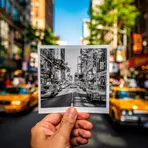
A photo, film, or TV picture in shades of black, white and gray
 34
2.5
34
2.5
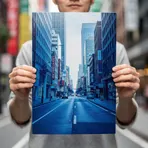
An image, film, or pattern that uses only black, white and gray
 4
6.3
4
6.3
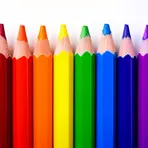
A picture made using only one color or its different shades
Antonyms
How Colorless
61
3.1

- Specialized
1
4.2
Surface Forms
Morphology
Etymology
Grayscale is made of gray and scale, with scale meaning 'a range'. As a noun, a grayscale is the 'range' of gray shades used in an image, from white to black, to show light and dark without color.