
gravitational collapse
 1
7.9
1
7.9

- noun
- /ˌɡrævɪˈteɪʃənl kəˈlæps/
- Specialized
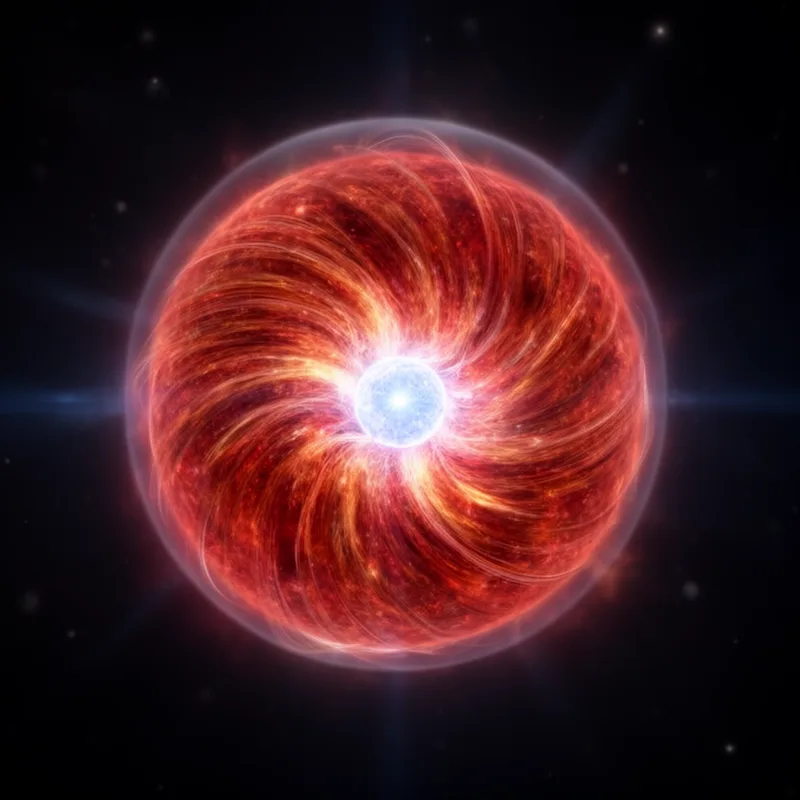
- If an object is truly undergoing gravitational collapse, then you can have some gravitational potential energy being converted to other forms of energy (in particular, thermal energy).
Loading YouTube…
Watch on YouTubeSo what we do know is there is no known force that can resist the gravitational collapse to a singularity, right?
- So what we do know is there is no known force that can resist the gravitational collapse to a singularity, right?
Examples
-
He wrote that gravitational collapse would result in an invisible black hole in the universe.
-
Brown dwarfs and black dwarf stars are stars whose primary source of heat is a slow gravitational collapse that is literally "squeezing" gravitational energy out in the form of blackbody radiation, a process that can take billions of years.
Blog text (18) -
The density sets the gravitational collapse time of the region.
Academic text (2011) -
In this case, objects would be defined by how they generate energy and how they support themselves against gravitational collapse.
Academic text (2003) -
So what we do know is there is no known force that can resist the gravitational collapse to a singularity, right?
-
For dark matter, though, the gravitational collapse cannot proceed far because dark matter cannot dissipate its kinetic energy.
Academic text (2011) -
Formed by gravitational collapse and flattened by orbital motion around their central star, the disks typically have sizes comparable to that of the Solar System or larger.
Academic text (2005) -
Gravitational collapse of a molecular cloud core takes place most strongly at the center, which is shrouded by a deep encircling envelope of gas and dust.
Academic text (1991) -
In 1755, Immanuel Kant had the remarkable insight that stars and planetary systems form by the gravitational collapse and rotational flattening of interstellar clouds.
Academic text (2005) -
Stars arise from the gravitational collapse of cold clouds of mostly hydrogen gas.
Synonyms
 350
4.1
350
4.1
A sudden failure, for example of a person or a building
Surface Forms
Morphology
The meaning is directly derivable from 'gravitational' (pertaining to gravity) + 'collapse' (a falling-in or failure): it denotes a collapse caused by gravity. Although the term is technical, the compositional logic is clear and cross-linguistically regular, so a B1 learner who knows both words can infer the basic meaning.
Etymology
Gravitational collapse paints a simple picture: gravitational means 'because of gravity' and collapse means 'to fall in', so a star's outer parts are pulled toward the middle and the star falls inward. That's why it means a star or body becoming much smaller and denser.