
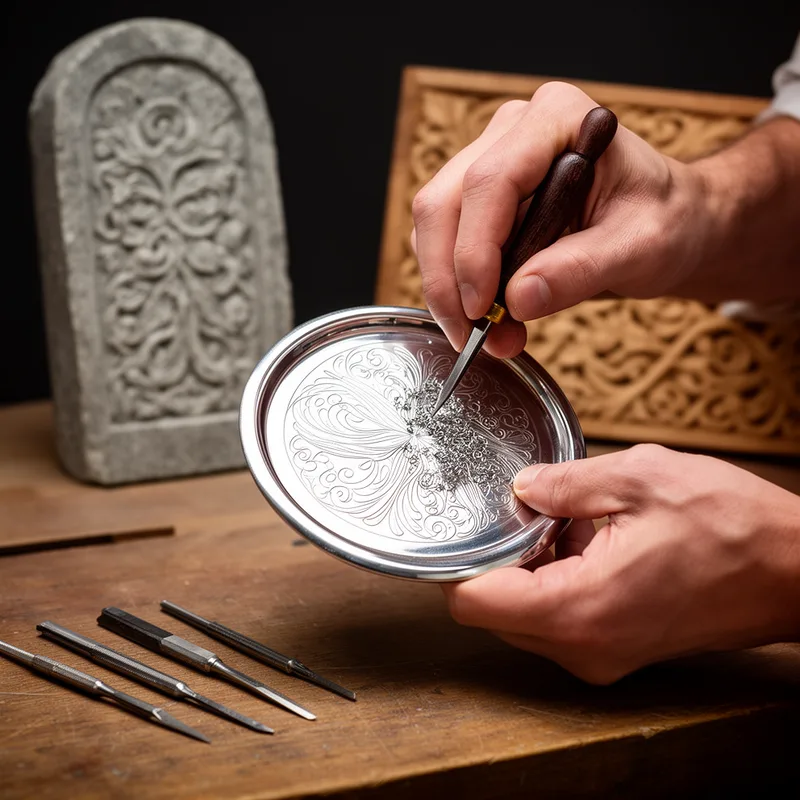
graving
- noun
- /ˈɡreɪvɪŋ/
- Archaic
- The museum displayed tools used for graving in the medieval period.
Examples
-
He admired the ancient graving found on the stone monument.
-
The detailed graving on the silver plate showed remarkable craftsmanship.
-
The artist's graving on the metal was exquisite.
-
She specializes in gravings for jewelry.
-
The artist showcased his passion for graving by creating intricate designs on wooden surfaces.
-
During the workshop, participants learned the technique of graving metal to create unique jewelry.
-
Her collection featured ancient coins with beautiful graving that depicted historical figures.
Synonyms

 70
2.7
70
2.7

An act of cutting wood, stone and ice to make a shape or the thing made
 25
4.1
25
4.1
A picture made by cutting or etching a hard surface
Compounds

- Specialized
A large dock that can be emptied of water so workers can fix the bottom of a ship
How Deep

Surface Forms
Morphology
Etymology
Graving meaning the act of carving comes from an old sense of grave/engrave that meant 'to dig' or 'to cut'. A helpful way to remember it is to imagine a craftsperson 'digging' lines into a surface — that action is graving.