
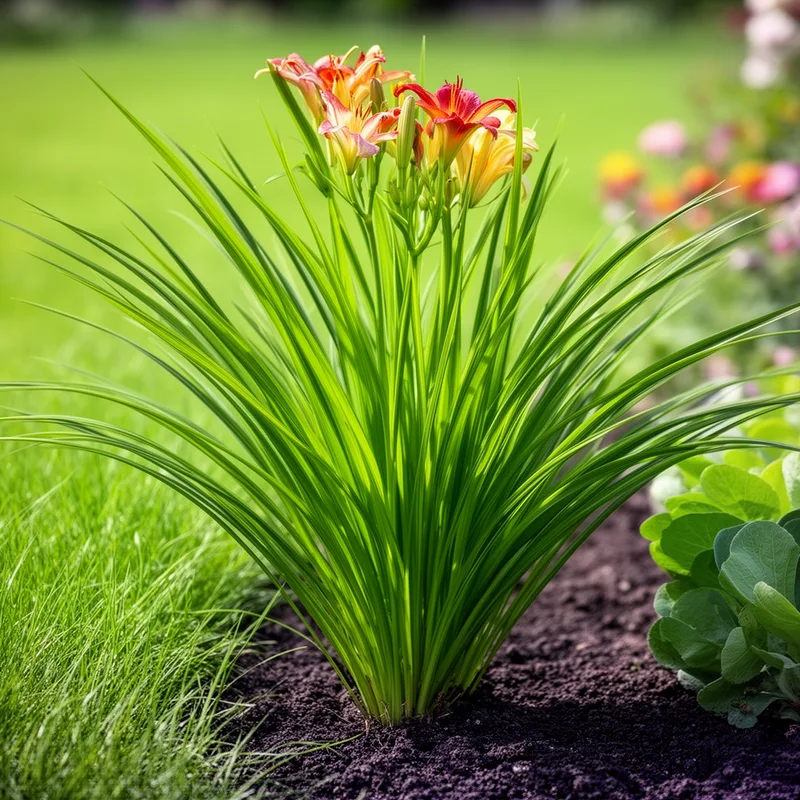
grassy-leafed
- adjective
- Some lilies are grassy-leafed, making them easy to mistake for true grasses at a glance.
Examples
-
Gardeners often choose grassy-leafed species to add texture to flower beds.
-
Gardeners often choose grassy-leafed plants to create a lush and textured landscape.
-
The grassy-leafed plant thrived in the sunlit meadow next to the real grasses.
-
The grassy-leafed plant thrived in the sunny garden.
-
Is this grassy-leafed species native to our region?
-
Some grassy-leafed species can easily be mistaken for grasses because of their similar appearance.
-
The grassy-leafed variety added an interesting visual element to the garden design.
Synonyms
Having long narrow leaves that look like grass

Like grass in look or feel
How Grasslike

Surface Forms
Morphology
Etymology
Grassy-leafed joins grassy ('like grass') and leafed ('having leaves'), so it means a plant 'with leaves like grass'. That's why gardeners call a plant grassy-leafed when its leaves are thin and grass-like.

