
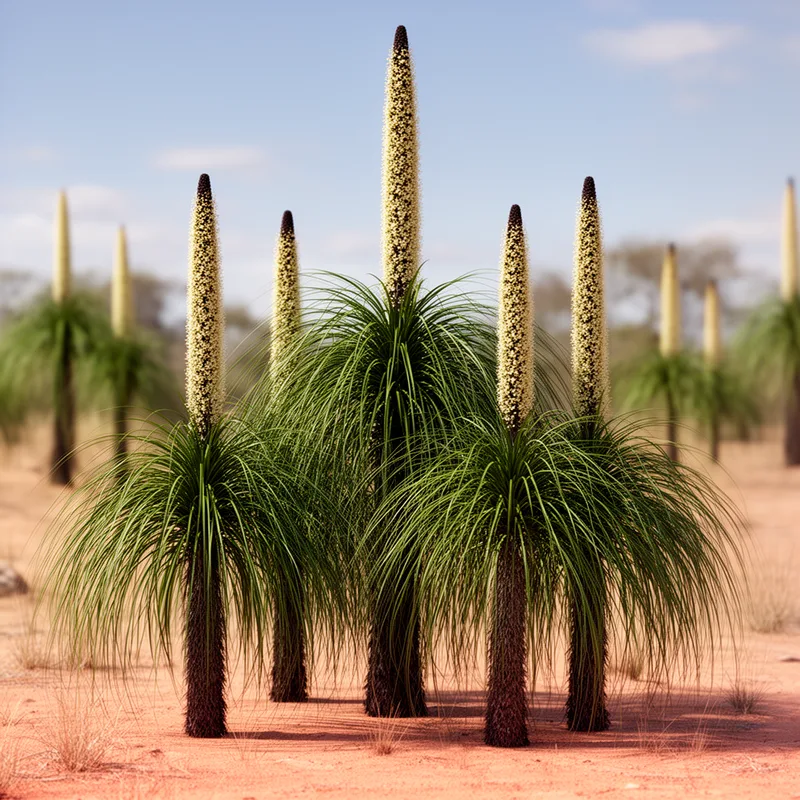
grass tree family
- noun
- Specialized
- The grass tree family is notable for species with long, slender leaves and tall flowering spikes.
Examples
-
Several Australian native plants belong to the grass tree family, especially those found in dry, sandy areas.
-
Many plants in the grass tree family thrive in dry climates.
-
Botanists debate whether the grass tree family should be classified separately from Liliaceae.
-
The grass tree family includes various unique species.
-
The grass tree family includes distinctive plants known for their striking flower spikes.
-
Members of the grass tree family have adapted to survive in harsh, arid environments.
-
The grass tree family is recognized for its role in supporting local ecosystems in Australia.
Synonyms
A group of plants that have flowers like daylilies and Australian grass trees
Surface Forms
Morphology
The phrase is transparently built from 'grass' + 'tree' forming the plant type 'grass tree' and 'family' indicating a taxonomic grouping, so a learner who knows the constituent words can infer it denotes the botanical family of grass trees. Although botanical jargon is specialized, the compositional structure follows standard English noun-compound + classifier patterns and is cross-linguistically straightforward.
Etymology
The noun grass tree family comes from how these plants look: they have long, thin leaves like grass and a woody stem or tall flower spike like a tree, so people who study plants called them a 'family' of related plants.

