
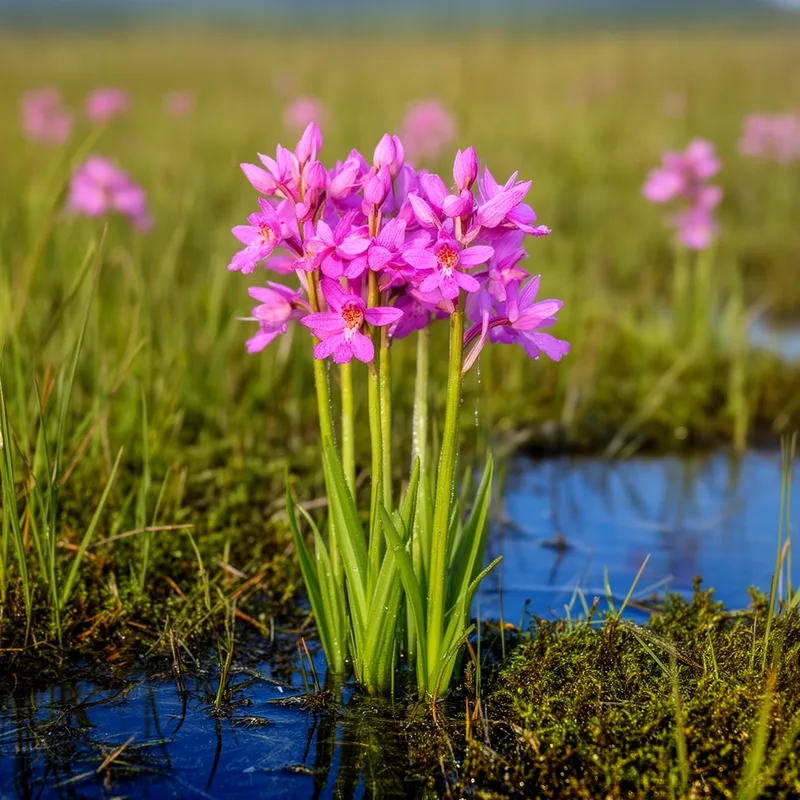
grass pink
- noun
- /ɡræs pɪŋk/
- Specialized
- The wet meadow was bright with blooming grass pinks in early summer.
Examples
-
Botanists conducted a study of the grass pink populations in the region.
-
The grass pink is admired for its delicate beauty and vibrant color.
-
Look at that grass pink!
-
The grass pink blooms beautifully in the spring.
-
The wet meadow was bright with blooming grass pink orchids in early summer.
-
Botanists conducted a study of the grass pink populations in the wetlands.
-
The grass pink is admired for its delicate pink flowers and vibrant color.
Synonyms
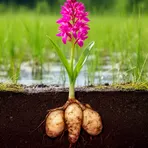
A North American orchid with bright pink flowers and thick underground roots
A North American wild orchid with bright pink to purple flowers
A group of wild orchids from North America that grow in soil and have pink flowers often called grass pinks
Surface Forms
Morphology
The compound is compositional: a B1 learner who knows 'grass' and 'pink' can plausibly infer this refers to a pink-colored plant associated with grassy habitats (i.e., a pink flower found in grass). This follows a common noun‑noun plant‑naming pattern and does not require idiomatic or metaphorical interpretation, so the meaning is transparently derivable from the parts.
Etymology
Grass pink comes from the sight of bright 'pink' orchid flowers growing in the 'grass' of wet meadows. That's why the name now refers to the North American pink orchid that you find in bogs and damp fields.

