
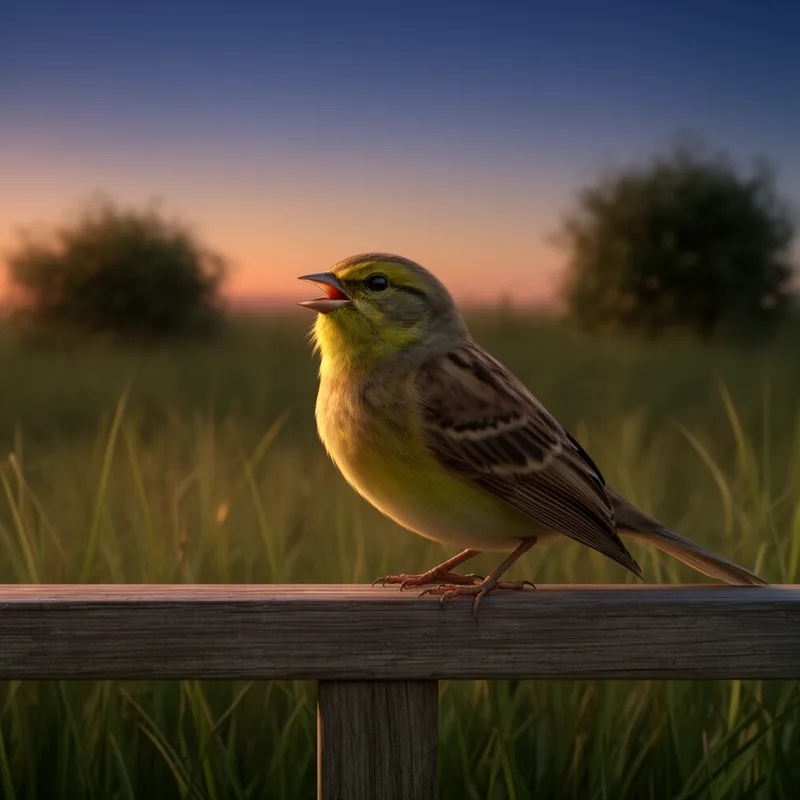
grass finch
- noun
- /ɡræs fɪnʧ/
- US
- The cheerful song of the grass finch filled the garden every evening in summer.
Examples
-
The grass finch sings beautifully at dusk.
-
We watched a grass finch perch on the fence as dusk settled over the field.
-
Birdwatchers delight in spotting the colorful grass finch during their spring migrations.
-
Have you ever seen a grass finch in your garden?
-
Birdwatchers delight in spotting the colorful grass finch during their spring migrations.
-
The cheerful song of the grass finch filled the garden every evening in summer.
-
We watched a grass finch perch on the fence as dusk settled over the field.
Synonyms

 1
6.8
1
6.8

A small North American bird with brown or gray feathers and red on the male's head and breast


 1
9.8
1
9.8
A small bird like a sparrow with a red patch on its head found in northern places

A small North American bird that sings a sweet song in the evening
A small brown sparrow that sings in the evening in open fields in North America
A small brown bird with a pink beak that lives in fields and bushes

A small North American bird with a reddish crown common in gardens and parks

A small North American bird often seen in towns and gardens

A small North American songbird with deep blue feathers

A small North American songbird with bright blue feathers on the male during breeding season

A small North American bird with males that have red heads and females with brown streaks
A small North American finch whose male has bright yellow feathers in summer

A small finch that lives in pine forests and eats seeds

A small finch with a red crown that lives in northern cold regions
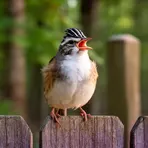
A small North American finch with a white throat patch and a striped head

A small brown bird often seen in winter that is called the American tree sparrow
Surface Forms
Morphology
The phrase 'grass finch' is a straightforward compound noun naming a type of finch associated with grass/habitat; its meaning (a small songbird) is directly inferable from 'grass' + 'finch'. This noun+noun composition is a common, cross-linguistic naming pattern and would be understandable to a B1 learner who knows the constituent words.
Etymology
Grass finch gives a clear picture: a small finch living and singing in the grass at dusk. That's why the name refers to a common 'small bird' known for its evening song.