
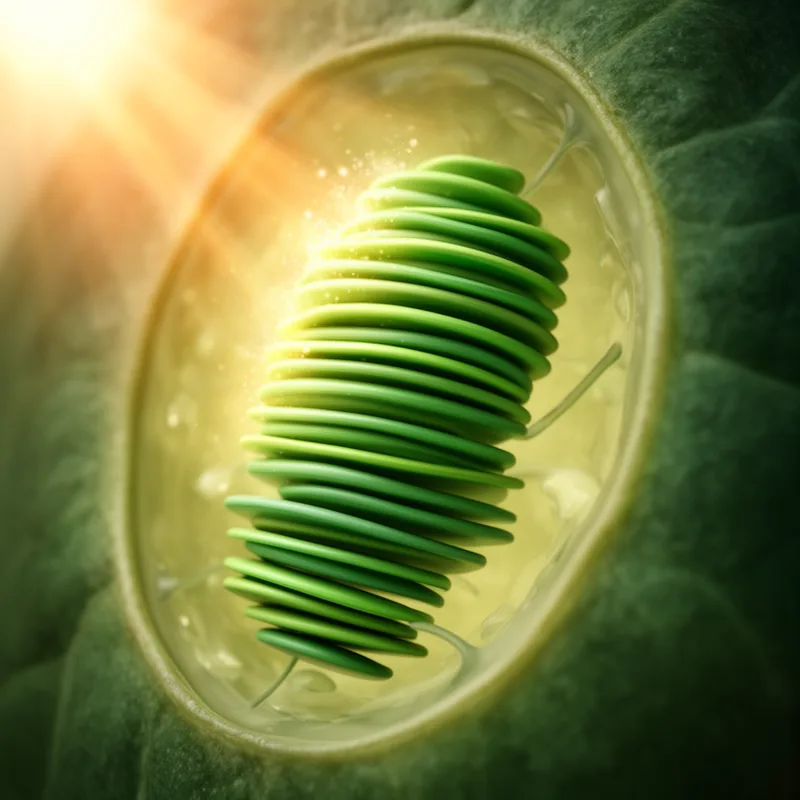
granum
- noun
- /ˈɡrænəm/
- Specialized
- A granum is essential for capturing light energy during photosynthesis in plant cells.
Examples
-
Damage to a granum can reduce the efficiency of photosynthesis in leaves.
-
A granum consists of several thylakoids stacked together.
-
Scientists observed that each granum consists of several stacked thylakoids.
-
Each granum plays a crucial role in energy conversion.
-
In plant cells, the granum is essential for facilitating photosynthesis.
-
Each granum contains multiple thylakoids for capturing light energy.
-
The granum plays a crucial role in the process of converting sunlight into chemical energy.
Surface Forms
Etymology
Granum for the chloroplast part also comes from Latin granum, meaning 'grain', because the stacks of thin discs inside the cell look like little piles or grains. So a granum is named for its grain-like stacked shape that helps the plant capture light for photosynthesis.

