

graining
- noun
- /ˈɡreɪnɪŋ/
- So what distinguishes the situations where you can have this bottle of course graining from those where it might not be possible?
Examples
-
The most difficult step which was the coarse graining we have completed.
-
The answer is it hardly matters how much coarse graining you do.
-
When you cut such small pieces from a single marble block, you run the risk of their breaking very easily if there is too much graining in the marble.
Academic text (2006) -
OK, so that's some of the efforts going on in coarse graining over space.
-
Consequently, they cannot account for top-down action in a hierarchy with coarse-graining of variables, feedback control loops, and the unique properties that can emerge by virtue of organization at high levels.
Academic text (2006) -
Since the Renaissance, artists have used faux wood graining techniques to give simple furniture, doors, and trim the look of much finer woods like tiger maple and burled walnut.
Blog text (14) -
The cabinet was beautifully finished with a graining that mimicked rich mahogany.
-
Furniture designers often use graining techniques to create the appearance of natural wood on synthetic materials.
-
The artist carefully applied graining to the canvas, making it resemble an intricate wood pattern.
Synonyms
 2
3.0
2
3.0

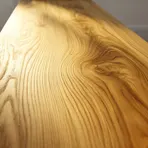
The lines and patterns you see on the surface of wood that its long thin parts make

 1
4.5
1
4.5
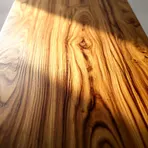
Lines and patterns on wood that show the direction of its fibres
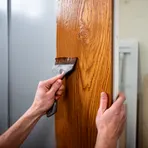
A way that makes something look like real wood by painting or finishing it
Antonyms
How Grainy

Surface Forms
Morphology
Etymology
The word graining comes from grain, which once meant a small 'seed' and later was used for the lines or marks you see in wood. So graining is the surface pattern or texture made to look like the natural grain of wood.