

grain cleaner
- noun
- Specialized
- The farmer purchased a new grain cleaner to prepare his wheat for storage.
Examples
-
Modern grain cleaners have improved the quality of cereals sold to the market.
-
The grain cleaner works efficiently.
-
After harvest, the grain cleaner efficiently removed dust and debris from the corn.
-
Farmers often use a grain cleaner to enhance quality.
-
The farmer invested in a new grain cleaner to ensure his harvest was free of dirt and debris.
-
After processing with the grain cleaner, the wheat was ready for packaging and sale.
-
The grain cleaner effectively separated the good grains from the ones that were spoiled.
Synonyms

 3
7.2
3
7.2

A machine that separates grain from husks and straw


 1
4.5
1
4.5
A machine that removes dirt and broken seeds before storage
 1
4.7
1
4.7
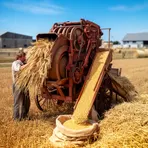
A machine on a farm that separates grain from stalks and husks
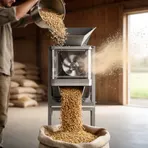
A person or machine that removes the dry outer parts from grain by blowing air through it
How Automated

Surface Forms
Morphology
The meaning is directly compositional: combining 'grain' (cereal seeds) with 'cleaner' yields 'a thing that cleans grain', which a B1 learner can infer as a machine or device for removing impurities. The noun+noun instrument/agent pattern is common cross-linguistically and follows regular English compound formation, so the sense is immediately understandable from the parts.
Etymology
Grain cleaner is a literal compound name: grain is the crop and cleaner is the machine that shakes and blows away dust, dirt and small stones from the grain. That's why it means a machine that 'cleans' grain and makes it 'ready for storage or sale'.