
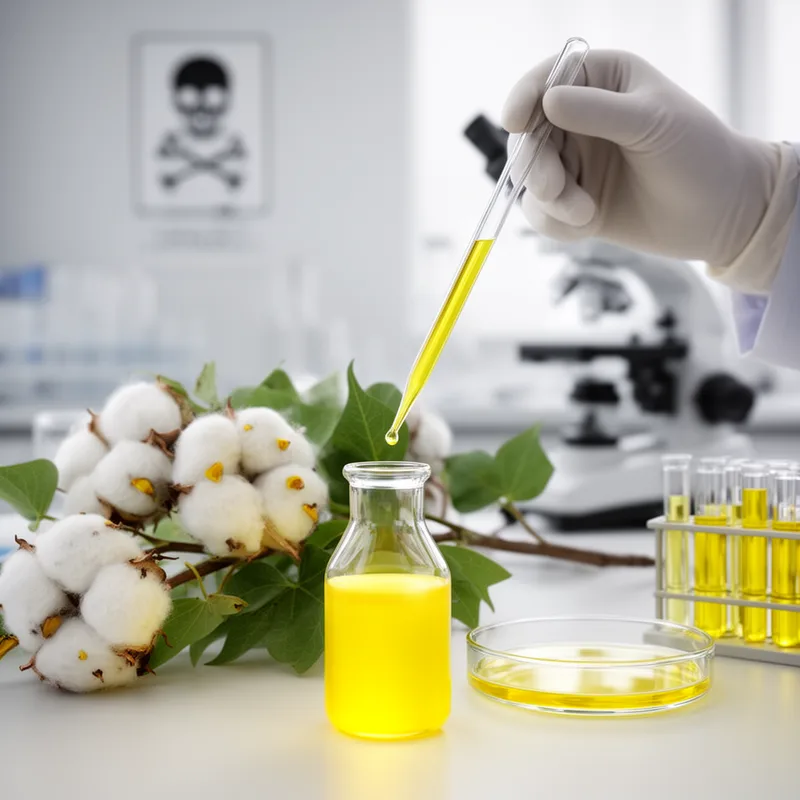
gossypol


 1
9.9
- noun
- /ˈɡɑːsɪpɒl/
- Specialized
- The toxic compound gossypol is produced by cotton plants to deter herbivores from feeding on them.
- a yellow pigment
Examples
-
Chirality makes gossypol difficult to analyze and separate.
Academic text (2005) -
But, by far, most of the interest is focused on a yellow pigment—gossypol—produced by the cotton plant's prolific roots.
Academic text (2005) -
But she had many questions to consider: Which cotton species produce the most gossypol?
Academic text (2005) -
"Late one Friday evening, I left a solution of gossypol in the lab's freezer," he says.
Academic text (2005) -
Would root cultures be stable enough to create gossypol over a long period?
Academic text (2005) -
In cotton plants, gossypol exists in two different forms, or isomers.
Academic text (2005) -
"Each type of gossypol has unique capabilities," says Dowd.
Academic text (2005) -
While gossypol is found in cottonseed, there are limited methods for extracting large quantities of it.
Academic text (2005) -
And because of its bitter taste, gossypol aids fledgling plants by keeping grazing herbivores away.
Academic text (2005) -
"We're examining the effectiveness of gossypol from cottonseed as a preventive agent for breast and prostate cancer," says Lin.
Academic text (2005)
Surface Forms
Morphology
gossypol = Gossypium + gossyp (opaque) = gossyp + ol
The element 'gossyp-' is a technical combining form referring to cotton and '-ol' is a chemical suffix; their combination names a specific compound and is not transparently meaningful to an average learner.
Etymology
Gossypol comes from the Latin word for cotton, gossypium, plus the chemical ending -ol, which often means 'alcohol' in chemical names. So gossypol is literally a 'cotton' chemical, which helps explain why it is a yellow, toxic compound found in cotton plants and used in research.