

gorgonian


 1
9.9
1
9.9
- noun
- /ɡɔrˈɡoʊniən/
- Specialized
- Wire corals are more on the expensive side of maricultured corals, especially compared to gorgonians (again, these are not gorgonians!), but 3-4 inch maricultured colonies can usually be found for around 60 dollars retail.
Examples
-
Wire corals are more on the expensive side of maricultured corals, especially compared to gorgonians (again, these are not gorgonians!), but 3-4 inch maricultured colonies can usually be found for around 60 dollars retail.
Blog text (33) -
Visit the Gorgonian Forest for a medley of sharks, including schools of 50 or more scalloped hammerheads and even whale sharks.
Blog text (3) -
Basically, this means wire corals are more closely related to Acros and zoanthids than to gorgonians or soft corals.
Blog text (33) -
Gorgonians are octocorals, while the Hawaiian gold and black corals are hexocorals.
Academic text (1993) -
Properties of gorgonian corals allow them to thrive in warm seas, creating beautiful underwater landscapes with their intricate branching structures.
-
Divers often encounter colorful gorgonians while exploring coral reefs, where they provide habitat for various marine species.
-
The aquarium features a display of gorgonians, showcasing their unique shapes and the diversity of coral life.
Synonyms
 55
2.6
55
2.6
A small sea animal that makes hard reefs and skeletons used in jewelry

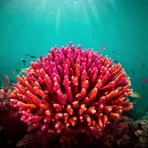
A sea animal with hard tree-like branches that lives in warm water
Compounds
Surface Forms
Morphology
gorgonian = Gorgon (opaque) = gorgon + ian
The formation is taxonomic/derivational from a mythological name and the sense 'type of coral' is specialized, so the meaning is not inferable by a typical learner from 'Gorgon' + '-ian'.
Etymology
Gorgonian comes from the mythic name Gorgon, a monster famous for having snakes for 'hair'. A helpful way to remember it is to picture the coral's many twisting branches like the Gorgon's snake 'hair', which is why gorgonian refers to a fan-like, branching coral.