
to go up
 95
2.0
95
2.0

- phrasal verb
- /ɡoʊ ʌp/
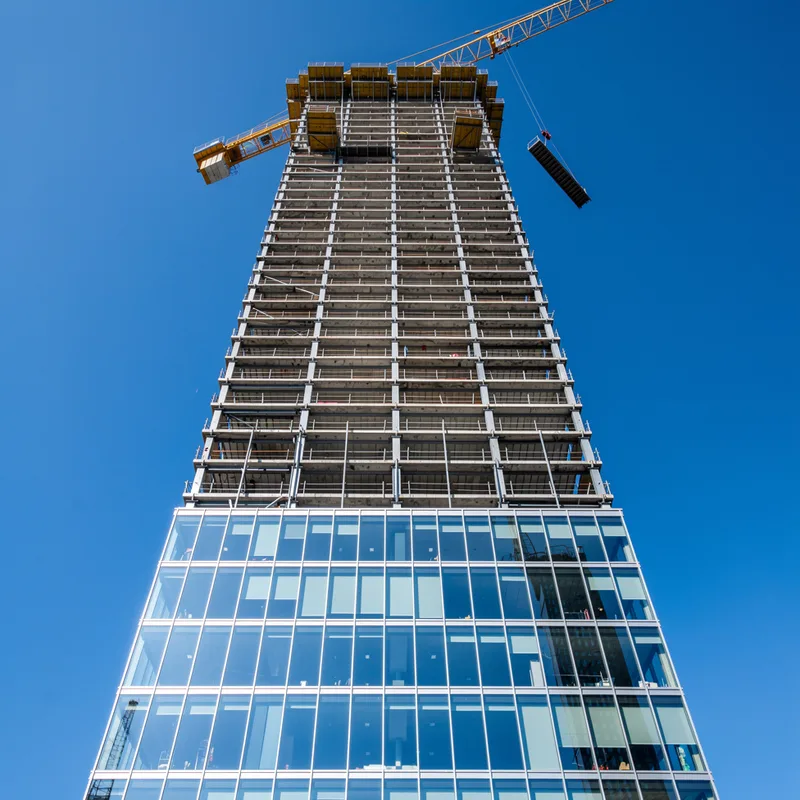
- Nothing has changed, but two more houses went up on our street.
- housing projects went up
Loading YouTube…
Watch on YouTubeFrom now on, we'll be blogging the house going up.
- From now on, we'll be blogging the house going up.
- It looks good because your house is going up.
Examples
-
There are cement walls going up, blocking their view.
-
So these buildings go up throughout the course of Hadrian's reign.
-
Tomorrow, the signs are going up.
-
The construction workers are on a lunch break from the new building going up down the street.
Fiction book (1992) -
When the apartment building went up almost forty years ago, it was the first in the neighborhood.
Fiction book (1996) -
There's a high rise going up on Wilshire.
-
By 1970, however, two shopping centers went up on remnant agricultural land.
Academic text (1998) -
Already the yuppie condos are going up in Freedmen's Town.
Academic text (2004) -
The first non-CERN website went up at SLAC (Stanford Linear Accelerator Center) in December 1991.
Academic text (2012) -
Two new apartments will go up on this vacant lot next month.
Synonyms
 80
4.1
80
4.1
Build something like a wall or statue
 59
3.0
59
3.0
Build something like a wall or sign
 46
3.7
46
3.7
To build a structure like a house or barn
Antonyms

How Complete

Surface Forms
Morphology
There is a clear compositional link: 'go' = become and 'up' signals a change into an 'up' state, so the idea of something becoming available is partially derivable. However, the specific reading 'be posted / uploaded / published (online)' depends on a metaphorical extension of up = online/published and on discourse conventions, so a B1 learner who only knows the literal words may not reliably infer this exact sense.
Etymology
Go up — The verb go up comes from the picture of a building rising from the ground: as workers lift walls and floors up, the new structure goes up, so it means 'to be built'.