
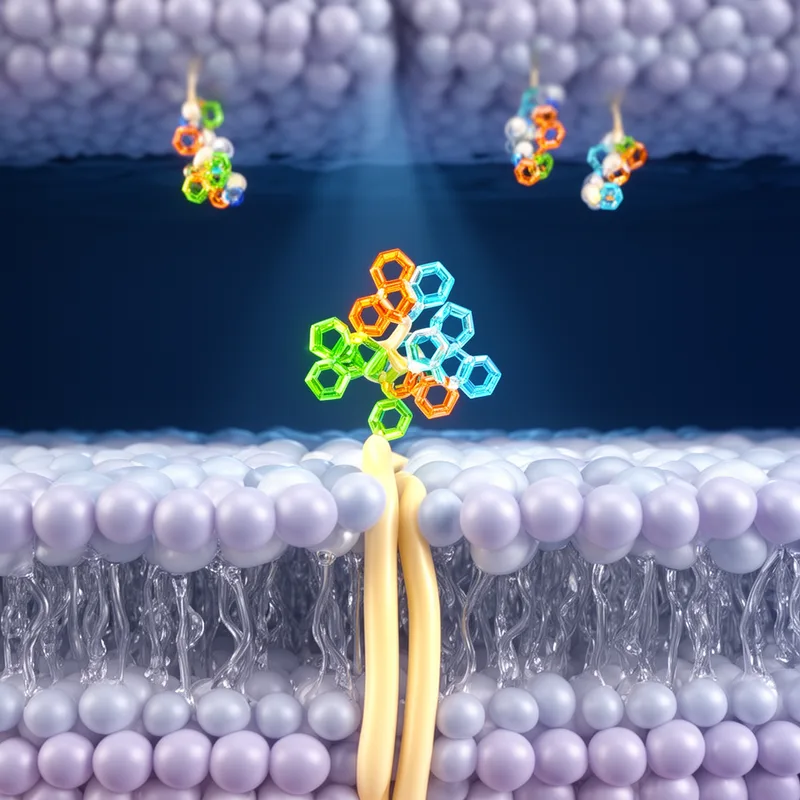
glycolipid
 1
6.8

- noun
- /ˌɡlaɪkoʊˈlɪpɪd/
- Specialized
- The study highlighted how a specific glycolipid can affect cell membrane integrity.
Examples
-
In general, NKT cells are divided into three subtypes based on their reactivity to the glycolipid GalCer, TCR chains, and CD1 dependency.
Blog text (11) -
It should be noted that humans lack the functional iGb3 synthase enzyme; hence they cannot produce this glycolipid 95.
Blog text (11) -
Glycolipid-laden macrophages were separated by density gradient centrifugation.
Academic text (1996) -
This dose thus appears to be sufficient to restore acid β-glucosidase activity to normal in the glycolipid-laden macrophages.
Academic text (1996) -
Glycolipid-loaded CD1d molecules are then recycled back to the cell surface 99–101.
Blog text (11) -
Recent findings indicate that many patients with Meniere's disease have anti-sulfated glucuronyl glycolipid (SGGL) serum antibodies.
Academic text (2002) -
Scientists found that the glycolipid composition varies significantly among different cell types.
-
In cells, the presence of a glycolipid can impact various lipid interactions.
Surface Forms
Morphology
Etymology
Glycolipid comes from two parts: glyco- meaning 'sugar' and lipid meaning 'fat'. So a glycolipid is a 'sugar-fat' molecule in the cell membrane that helps cells recognize and communicate with each other.