
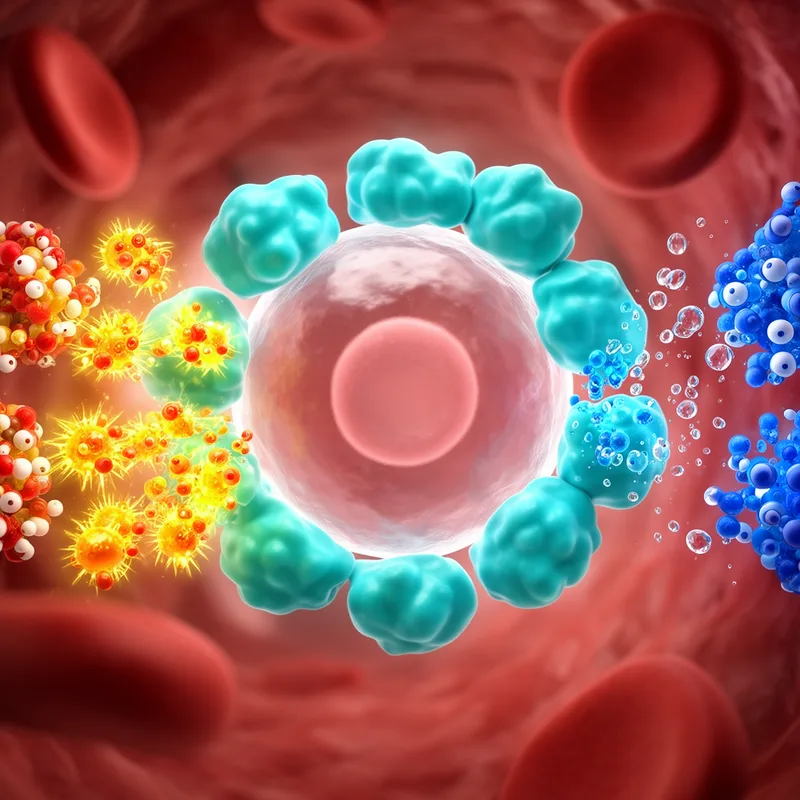
glutathione peroxidase
- noun
- /ˌɡluːtəˈθaɪoʊn pəˈrɒksɪdeɪs/
- Specialized
 :
peroxidasa de glutatión
:
peroxidasa de glutatión
- The enzyme glutathione peroxidase helps protect the body from oxidative damage by breaking down harmful substances like hydrogen peroxide.
Examples
-
The glutathione peroxidase enzyme plays a vital role in detoxifying harmful substances.
-
A deficiency in glutathione peroxidase can increase susceptibility to cell damage.
-
Researchers measured glutathione peroxidase levels in the patients' blood samples.
-
The activity of glutathione peroxidase helps protect the body from oxidative stress.
-
High levels of glutathione peroxidase can protect cells from oxidative stress.
-
Research indicates that adequate levels of glutathione peroxidase are crucial for cellular health and preventing oxidative stress.
-
In the body, glutathione peroxidase is essential for detoxifying harmful organic peroxides and maintaining overall cell function.
Synonyms
 4
7.9
4
7.9

An enzyme that protects cells by turning harmful oxygen molecules into safer forms
 1
7.9
1
7.9
An enzyme in plants that uses hydrogen peroxide to change other chemicals


 1
7.3
1
7.3
A protein in cells that breaks hydrogen peroxide into water and oxygen

A protein in cells that turns harmful superoxide into oxygen and hydrogen peroxide
Surface Forms
Morphology
The term is compositionally transparent: 'peroxidase' denotes an enzyme that acts on peroxides and 'glutathione' names an antioxidant, so together they describe an enzyme using glutathione to break down peroxides. Although technical vocabulary, the noun+noun biomedical naming is predictable, so a learner who knows both constituents can infer the overall meaning.
Etymology
The enzyme glutathione peroxidase is named for what it does: glutathione is the small helper molecule it uses, and peroxidase means 'a protein that breaks down peroxides'. So the name tells you it protects cells by using glutathione to break down harmful peroxides like hydrogen peroxide.