
glutamate
 5
5.5
5
5.5

- noun
- /ˈɡluːtəˌmeɪt/
- Specialized
 :
glutamato
:
glutamato
- What about a glutamate blocker like Memantine?
- glutamate neurotransmitter
- glutamate receptors
OK, The third one you name that's glutamate is the most important neurotransmitter.
- OK, The third one you name that's glutamate is the most important neurotransmitter.
- And there's increasing evidence that abnormalities and glutamate may play a role in OCD.
- Neurons that release dopamine Co release glutamate.
- And what I mean by that is like we have neurotransmitters in our brain like glutamate and GABA, serotonin, dopamine and other things.
- I mean, impulses are always regulated by by Gabin, by glutamate and acetylcholine is one of them.
Examples
-
But look, after you make the decision, the glutamate kind of sticks around.
-
And we need we need glutamate to make GABA, right?
-
And what it's going to do is it's going to take glutamate, glutamine.
-
OK, The third one you name that's glutamate is the most important neurotransmitter.
-
And there's increasing evidence that abnormalities and glutamate may play a role in OCD.
-
Glutamate is the principal excitatory neurotransmitter in the brain and spinal cord.
Academic text (2000) -
Glutamate appears to act primarily on AMPA-type receptors in the vestibular nuclei.
Academic text (2005) -
The chief neurotransmitter in the vestibular nuclei is believed to be the excitatory amino acid glutamate.
Academic text (2005) -
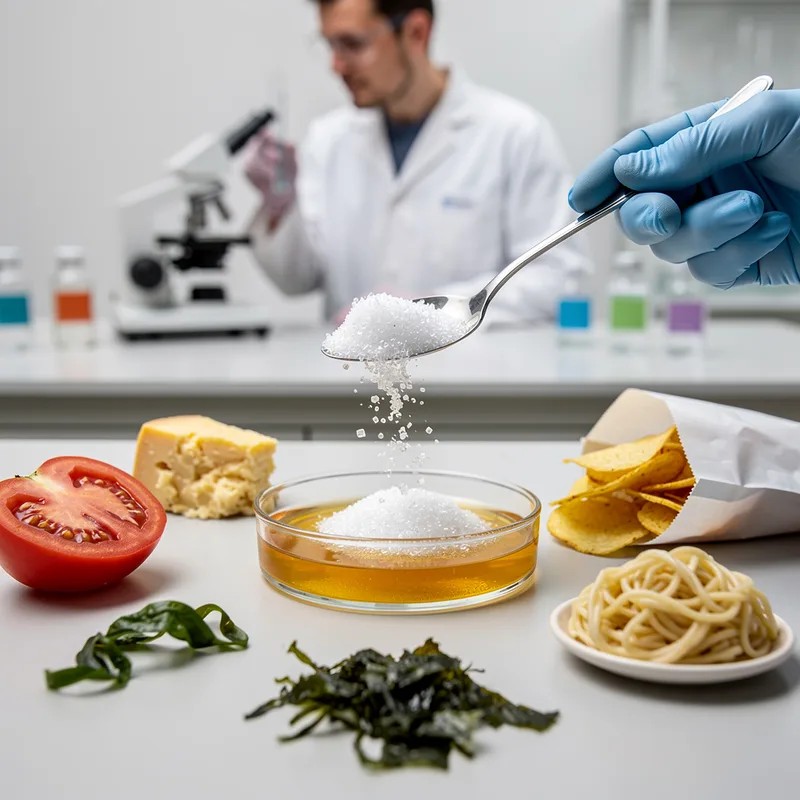
Many foods, such as tomatoes and mushrooms, contain natural glutamate that enhances their flavor.
-
The addition of glutamate in dishes can significantly improve their taste and aroma.
Compounds


Surface Forms
Morphology
glutamate = glutamic acid (opaque) = glutam + ate
The suffix '-ate' is used to form names of salts or esters, but without knowledge of 'glutamic acid', the word is not transparent.
Etymology
Glutamate comes from gluten, a Latin word meaning 'glue', because the related glutamic acid was first found in wheat protein, and the ending -ate shows it is a chemical 'salt'. So, glutamate is the salt form of glutamic acid that is found in food and in living things.