
glucuronide


 1
9.9
- noun
- /ɡluːˈkjʊərənaɪd/
- Specialized
- Researchers measured the amount of glucuronide produced after the medication was metabolized.
Examples
-
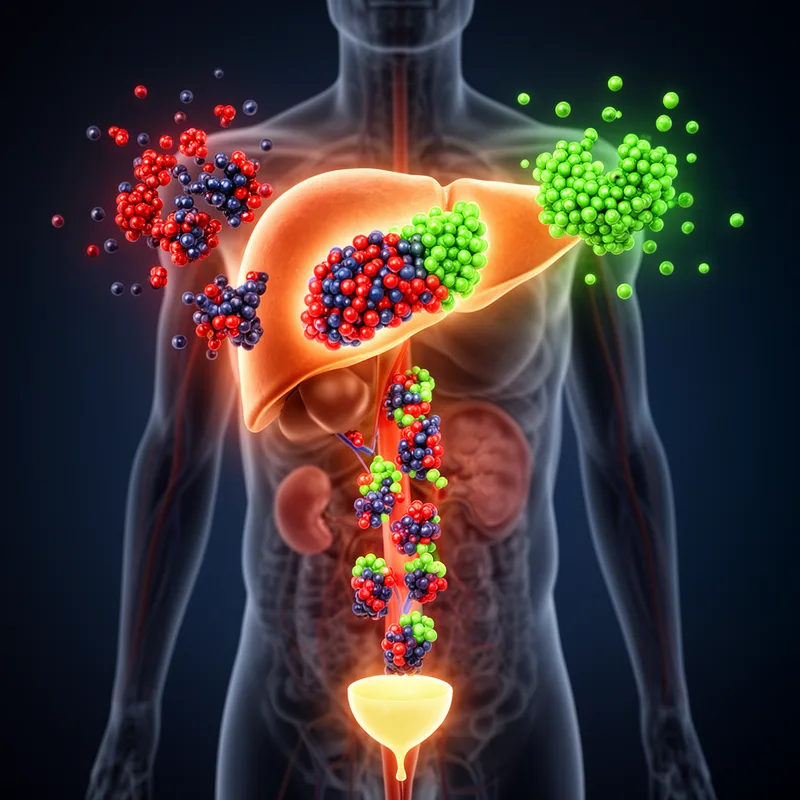
The doctor explained that the drug is excreted as a glucuronide in the urine.
-
Elevated glucuronide levels can indicate how well the liver is functioning.
-
The liver produces glucuronide to detoxify substances.
-
Many drugs are converted into glucuronides in the body.
-
In the liver, drugs are often transformed into glucuronide compounds to facilitate their removal from the body.
-
The metabolism process converts many toxins into glucuronide forms, making them easier to excrete.
-
Doctors study how various medications form glucuronide compounds to enhance drug elimination.
Synonyms
 1
9.9
A chemical often in plants where a sugar is attached to another part used as medicine
Surface Forms
Morphology
glucuronide = glucuronic acid (opaque) = glucuronic + ide
The term is derived from 'glucuronic acid' and '-ide', but these components are not independently recognizable to most learners without specialized knowledge.
Etymology
Glucuronide comes from glucose ('sugar') plus the part -uronic from a word for 'urine', because these acids were first found in urine, and the ending -ide marks it as a chemical. So, a glucuronide is a compound the body makes when it attaches a sugar-like acid to a drug or toxin to help send it out of the body.