

glottochronology
- noun
- /ɡlɑːtəˌkrɒnəˈlɒdʒi/
- Specialized
- Linguists often apply glottochronology to determine when two related languages diverged from their common ancestor.
Examples
-
Building on the foundation laid by the comparative method, historians use glottochronology to establish an approximate chronology of language divergence from ancestral languages to daughter speech communities.
Academic text (2004) -
Glottochronology uses a mathematical constant rate to measure the cumulative effect that the individually random changes have on the vocabulary of a proto-language.
Academic text (2004) -
However, his remains the first systematic attempt to apply glottochronology to African language families.
Academic text (2004) -
Some linguists' objections to glottochronology are specific to the method.
Academic text (2004) -
The basic tenet of glottochronology is that speech communities change their core vocabulary in a random manner.
Academic text (2004) -
Therefore, until there is sufficient interdisciplinary evidence to confirm the dates generated by glottochronology, these dates must be considered tentative.
Academic text (2004) -
Since its inception, linguists have generally treated glottochronology with caution and, in some cases, disdain.
Academic text (2004) -
Africanist Christopher Ehret recently reviewed empirical linguistic and archaeological data in four language families in four different regions of Africa to test dates generated by glottochronology against dates generated by archaeology.
Academic text (2004) -
The research on glottochronology provides insights into how languages evolve over time.
-
By using glottochronology, researchers can estimate the timelines of language changes in different regions.
Synonyms



 1
5.8
1
5.8
The study of how languages change over time
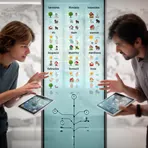
A method using word lists to measure how closely languages are related and estimate when they separated

The study of how languages change over time

The study of how languages change over time
Surface Forms
Morphology
glottochronology = chronology (semi-transparent) = glotto + chronology
Formed by adding the specialized combining form 'glotto-' (relating to language) to the familiar word 'chronology'; the combining form is technical and may be unfamiliar to many learners.
Etymology
Glottochronology comes from Greek parts glotto 'language', seen in the word glossary, and chronology from chronos 'time'. So it literally means studying languages over time by comparing basic words to estimate when related languages split.