
glomalin
- noun
- Specialized
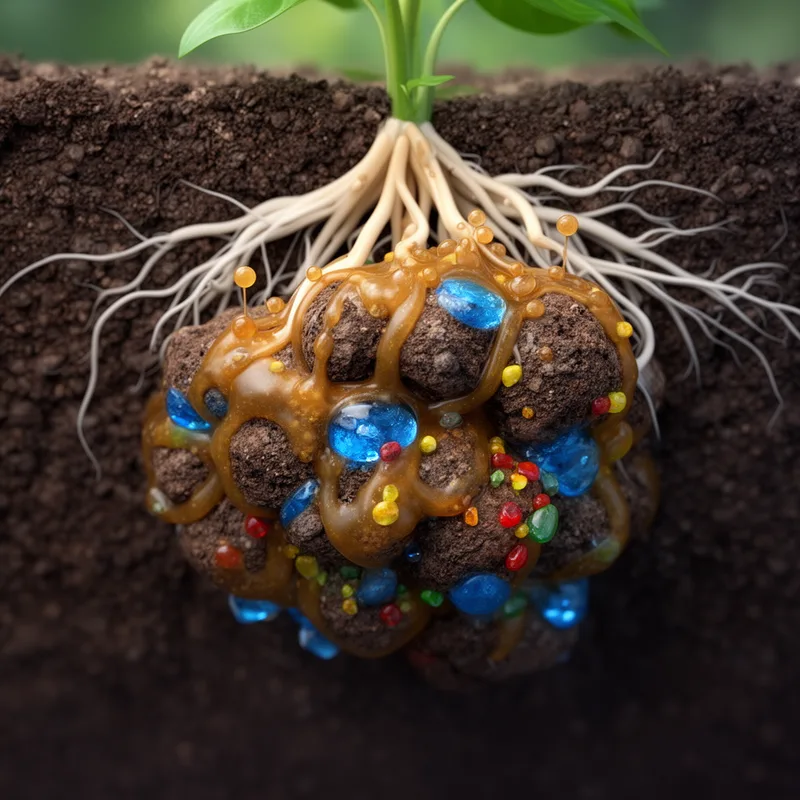
- The presence of glomalin is important because it improves soil structure by binding particles together.
- glomalin in certain soils
- glomalin-producing fungi
- glomalin levels
Examples
-
The increase in glomalin production helps soil build defenses against degradation and erosion and boosts its productivity.
Academic text (2002) -
Arbuscular mycorrhizal fungi, found living on plant roots around the world, appear to be the only producers of glomalin.
Academic text (2002) -
Another team recently used carbon dating to estimate that glomalin lasts 7 to 42 years, depending on conditions.
Academic text (2002) -
The fungi use carbon from the plant to grow and make glomalin.
Academic text (2002) -
Her recent work with Nichols has shown that glomalin levels are even higher in some soils than previously estimated.
Academic text (2002) -
Not only does glomalin contain 30 to 40 percent carbon, but it also forms clumps of soil granules called aggregates.
Academic text (2002) -
Microaggregates form as decomposing roots, fungal hyphae, glomalin, fecal material, and other forms of detritus become encrusted with mineral particles.
Academic text (2006) -
The role of glomalin in soil health is critical for maintaining fertility and preventing erosion.
-
Researchers have found that glomalin produced by fungi can enhance soil stability.
Surface Forms
Morphology
Etymology
Glomalin comes from a soil fungus name, Glomus, plus the protein ending -in, and Glomus comes from a Latin word meaning 'ball', as in globe. So glomalin is a 'protein' made by that 'ball' fungus that helps soil particles stick together into clumps, which is why it improves soil structure.

