
gliosis


 1
9.8
- noun
- /ɡlaɪˈoʊsɪs/
- Specialized
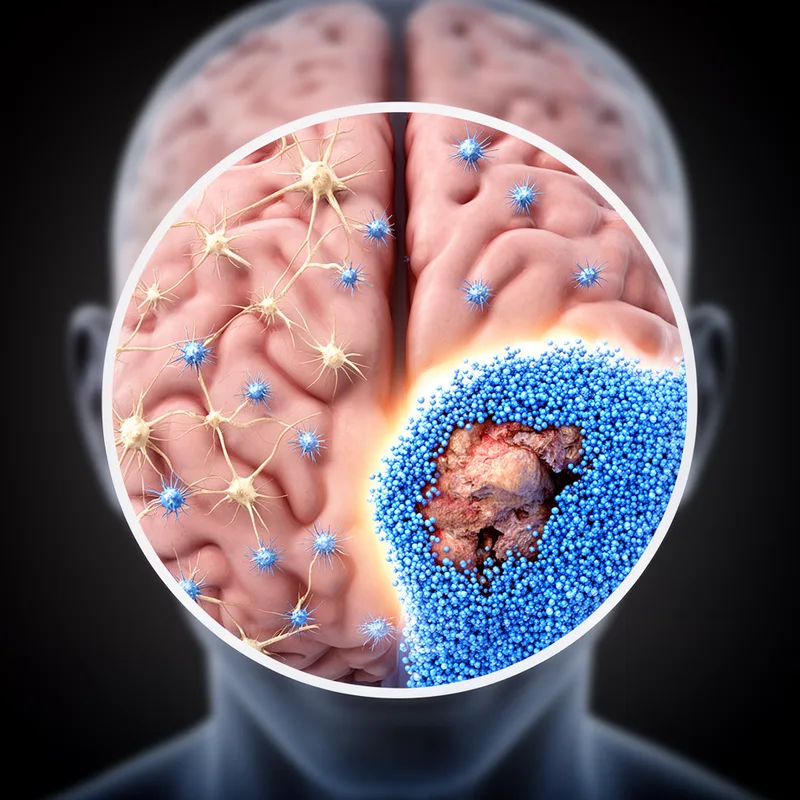
- In mammals, damage to the central nervous system often results in "reactive gliosis," in which glial cells proliferate to form a protective scar.
Examples
-
Astrocyte gliosis was observed throughout the brain in 113LBoPrP-Tg037 mice, even at the early stage of the disease.
Academic text (2013) -
After a brain injury, researchers noted significant gliosis as glial cells increased to repair the affected area.
-
Going forward, it will be important to determine how fish circumvent reactive gliosis and whether Müller glia represent a source of adult stem cells in mammalian eyes.
Blog text (6) -
The patient experienced gliosis in the spinal cord following the traumatic accident, indicating a response to the injury.
-
In a study of nerve damage, scientists found that gliosis played a crucial role in forming a protective barrier around the injured cells.
Surface Forms
Morphology
gliosis = glia (opaque) = glio + osis
This is a specialized medical formation ('glia' + '-osis'); without medical knowledge of 'glia' or the suffix '-osis' a typical B1 learner cannot derive the meaning.
Etymology
The word gliosis comes from the Greek root glia, which means 'glue', and the ending -osis, which means 'a condition'. So, gliosis describes an increase of the brain's 'glue' cells after injury.