
glauconite
- noun
- /ˈɡlɔːkəˌnaɪt/
- Specialized
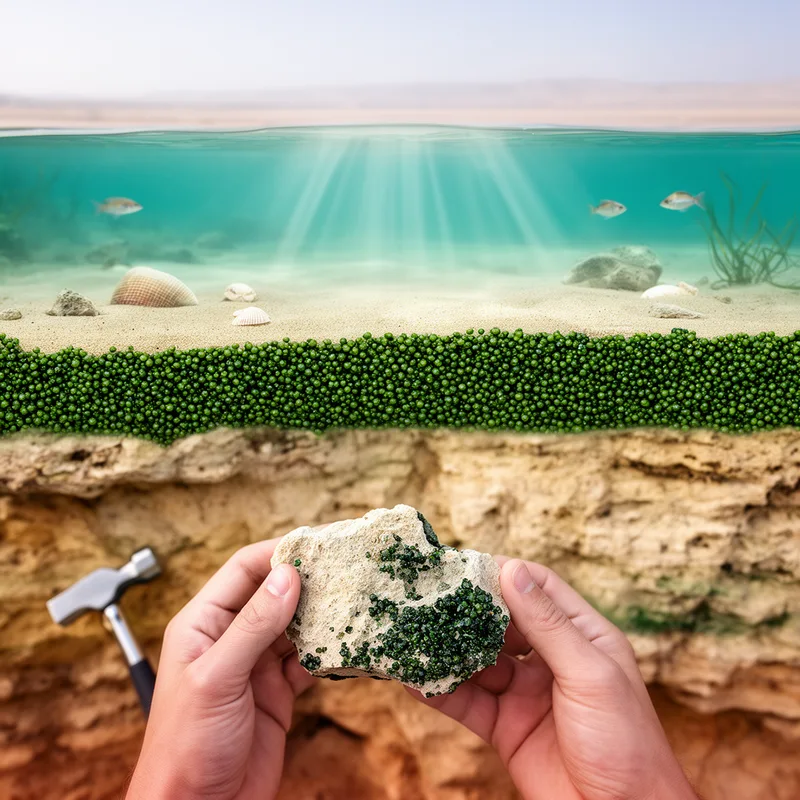
- The presence of glauconite gives the sandstone its characteristic green color.
Examples
-
The soil sample contained traces of glauconite, indicating it was once part of a shallow sea.
-
The glauconite layers were visible in the rock formation.
-
Geologists often study deposits of glauconite to understand ancient marine environments.
-
Wow! Look at this beautiful glauconite specimen!
-
Geologists often study deposits of glauconite to understand ancient marine environments.
-
The presence of glauconite gives the sandstone its characteristic green color.
-
The soil sample contained traces of glauconite, indicating it was once part of a shallow sea.
Surface Forms
Morphology
glauconite = glaucous (opaque) = glaucon + ite
Although '-ite' marks a mineral, the combining form 'glaucon-' (bluish-green) is rare and not known to most learners, so the meaning is not predictable from parts.
Etymology
Glauconite starts with glauc-, from an old Greek word meaning 'blue-green' or 'pale green'. That's why glauconite is a green mineral often found in green sand and used by geologists to tell us about ancient seas.

