
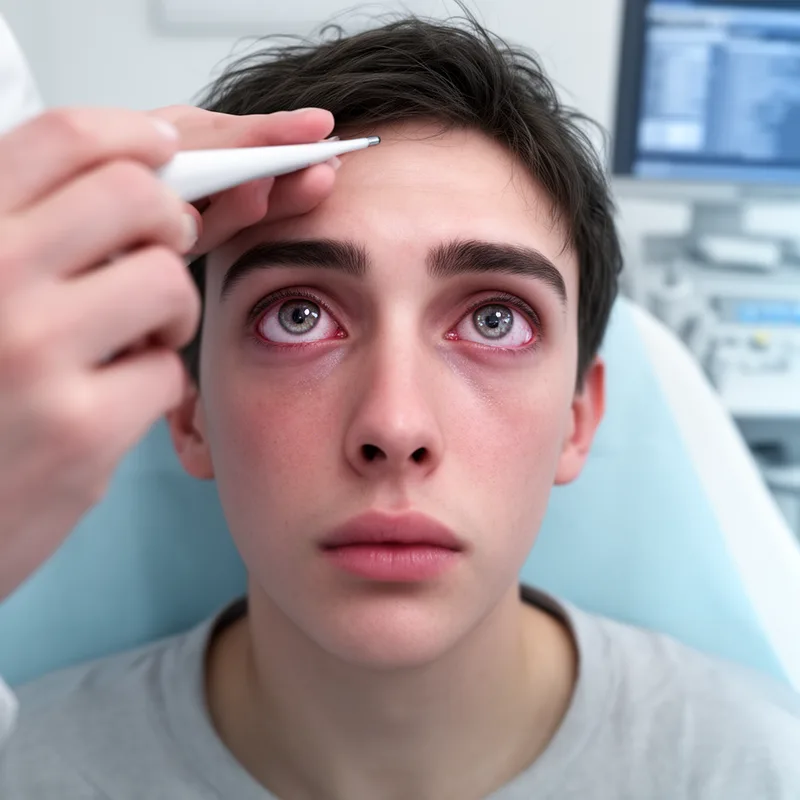
glassiness
- noun
- /ˈɡlæsɪnəs/
- Alcohol can cause temporary glassiness in a person's eyes.
Examples
-
The patient's glassiness suggested he was in shock.
-
She looked at him with a glassiness in her eyes.
-
The glassiness in his eyes made the doctor suspect he was running a high fever.
-
After hearing the shocking news, a strange glassiness came over her expression.
-
His eyes showed a glassiness that indicated he was not fully present in the moment.
-
The glassiness in her eyes suggested that she had been crying recently.
-
After the accident, a glassiness appeared in his eyes as he struggled to comprehend what had happened.
Synonyms

A tired, unfocused feeling in the eyes that makes your sight blurry
Antonyms


How Glazed

- Offensive
 18
4.1
18
4.1
Surface Forms
Morphology
Etymology
The word glassiness also comes from glass because a dull or 'glazed' look in the eyes can remind you of glass. That's why 'glassiness' describes a blank, shiny, or unfocused appearance in someone's eyes.