

glaive
9.9
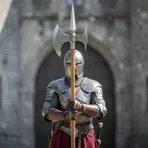
A weapon with a long blade like a sword on a long handle used in medieval battles
- noun
- /ɡleɪv/
:
guja
- In the medieval battlefield, the knight wielded his glaive with skill, slicing through the enemy ranks.
Examples
-
The museum displayed a historic glaive, showcasing the craftsmanship of ancient weapons.
-
The glaive-armed soldier stubbornly barred the entrance, standing like a human portcullis.
Fiction book (1992) -
During the reenactment, the soldier demonstrated how to effectively use a glaive to fend off attackers.
Synonyms

sword
vsglaive
 ∞
1.0
∞
1.0

A long metal weapon with a handle used for cutting or stabbing
is sometimes mounted on a long shaft rather than only hand-held
 1
9.9
1
9.9
A long wooden pole with an axe blade and a spear point for fighting
may be a single long blade rather than an axe head plus spike
How Long


Surface Forms
Etymology
Glaive comes from an old French word for 'sword' and from Latin gladius, which also means 'sword' and is the same root as gladiator. So a glaive originally meant a long, sword-like weapon, which is why it refers to a medieval sword or polearm.