
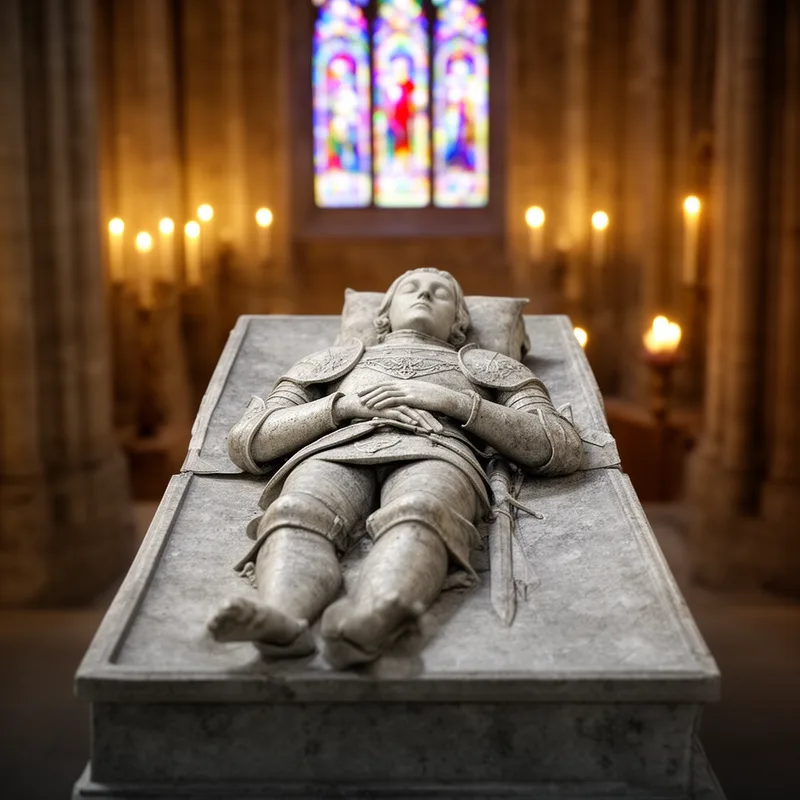
gisant
- adjective
- /dʒɪˈzɑːnt/
- Archaic
- The museum displayed a gisant figure carved from marble, representing a sleeping noblewoman.
Examples
-
Art historians studied the gisant effigies to learn about burial customs of the period.
-
The medieval tomb featured a gisant statue of the knight in full armor.
-
The gisant figure in the cathedral captured the attention of all visitors.
-
Is this sculpture a gisant representation of a historical figure?
-
The medieval tomb featured a gisant statue of the knight in full armor.
-
The museum displayed a gisant figure carved from marble, representing a sleeping noblewoman.
-
Art historians studied the gisant effigies to learn about burial customs of the period.
Synonyms

 9
4.0
9
4.0

Lying on the back on the ground because someone is tired, hurt, or sick
 3
7.4
3
7.4
Lying on the back with the face up


 1
6.1
1
6.1
A person who is on their back with their face up
Surface Forms
Etymology
Gisant comes from the French verb gésir, which means 'to lie', and from the old Latin verb jacere, 'to lie down'. Like the English verb lie, when something is called gisant it is shown 'lying down', so the word fits art that shows a figure lying flat.