
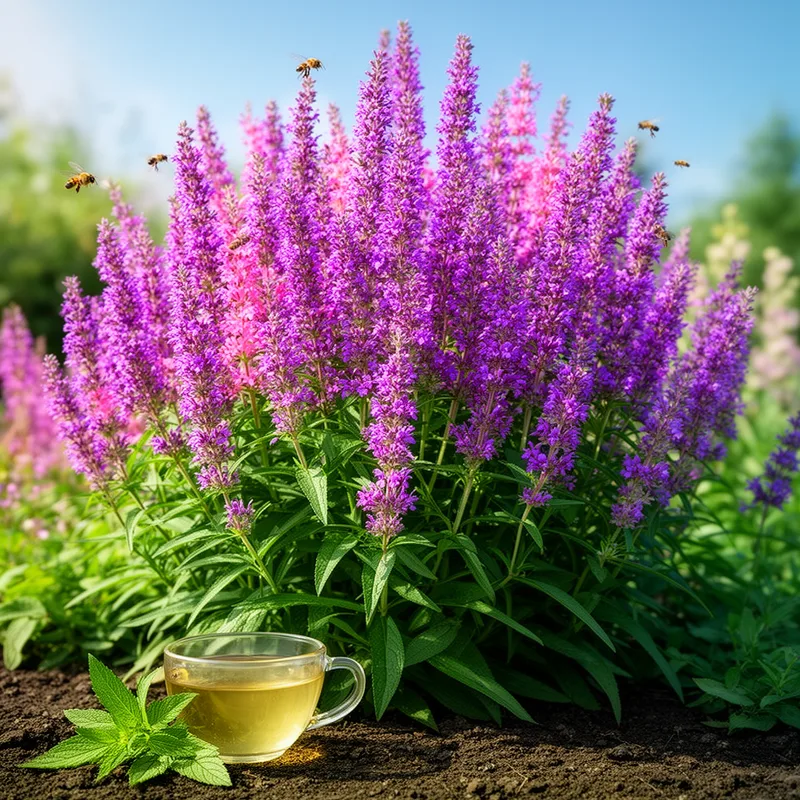
giant hyssop
- noun
- /ˈdʒaɪənt ˈhɪsəp/
- Giant hyssop thrives in sunny, well-drained soil and blooms throughout the summer.
Examples
-
Many gardeners grow giant hyssop to attract bees and butterflies to their yards.
-
The leaves of giant hyssop are often used to make herbal teas.
-
The giant hyssop blooms beautifully in the summer.
-
I planted several giant hyssops in my garden.
-
Many gardeners grow giant hyssop to attract bees and butterflies to their yards.
-
The leaves of giant hyssop are often used to make herbal teas.
-
I planted several giant hyssops in my garden.
Synonyms

A flowering plant with bright flowers and scented leaves that attract bees
A tall, long-lived plant with yellow-green flower spikes that attract bees
A tall plant with yellow-green flowers that lives for many years
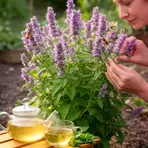
A North American herb with many branches and a smell like fennel, used in gardens and for tea

A garden herb with sweet-smelling leaves used for tea and to attract bees

A plant from Mexico that lives for years and has pink to red flowers used in gardens and medicine
Surface Forms
Morphology
The noun phrase is a straightforward modifier + noun composition: 'giant' simply specifies a large/big variety of 'hyssop', so the overall meaning (a very large hyssop plant or species) is directly derivable from the parts. This plant-naming pattern is cross-linguistically common and follows standard English compound semantics, making it comprehensible to a B1 learner who knows both constituents.
Etymology
Giant hyssop likely comes from combining giant, meaning 'very large', with hyssop, an old word for a 'fragrant herb'. So the name gives a clear image: it is a larger, scented plant like other hyssops, which is why we use it today for that garden plant.

