
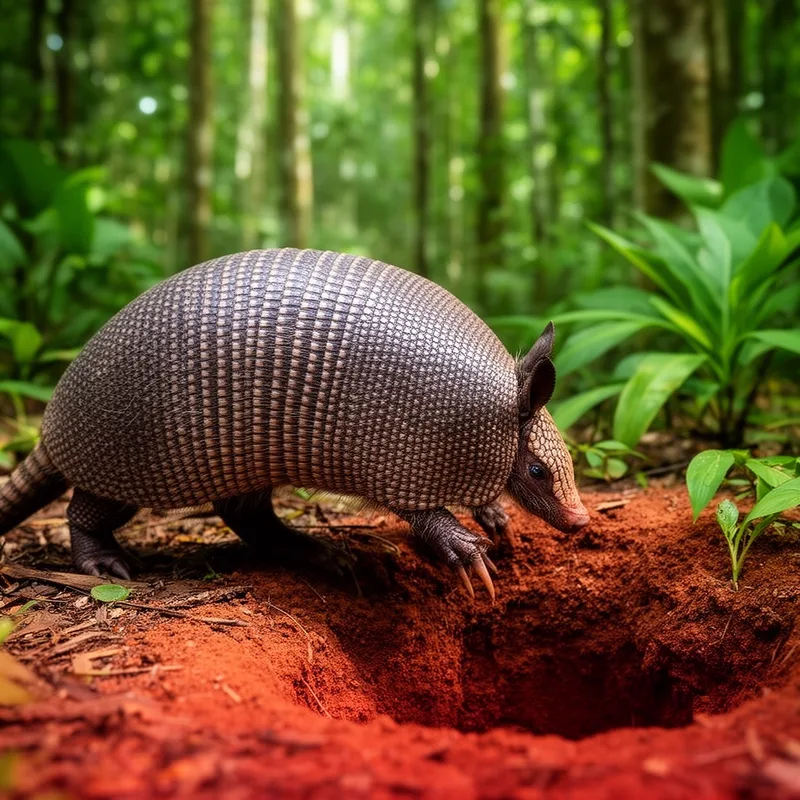
giant armadillo


 1
7.3
1
7.3
- noun
- /ˈdʒaɪənt ˌɑːrməˈdɪloʊ/
- US
- The giant armadillo is known for its hard shell and burrowing habits.
Examples
-
In South America, the giant armadillo can grow to about three feet in length.
-
It's in the shape of a giant armadillo.
-
There were buffalo ten feet high, and giant armadillos, and up north he could see elephants with shaggy coats, like bears.
Fiction book (1991) -
Many tourists visit Brazil to see the giant armadillo in its natural habitat.
Synonyms
 17
5.2
17
5.2
A small mammal from the Americas that has a hard shell and digs at night
 1
9.9
1
9.9
A large animal from South America with a hard shell that protects it
A very large armadillo from South America that grows about one metre long without the tail

A giant armadillo that lives in South America
How Big

Surface Forms
Morphology
The meaning is directly compositional: 'giant' (very large) modifies 'armadillo' (the animal), so a B1 learner who knows both words can infer it refers to a very large armadillo. This adjective+noun pattern is a standard, cross-linguistic way to indicate size and involves no idiomatic or metaphorical shift.
Etymology
The name giant armadillo comes from a simple, literal picture: armadillo is a Spanish word meaning 'little armored one', and adding giant shows the animal is 'very large', so the name tells you it is a very big, armored animal from South America.