

to get up
 ∞
1.0
∞
1.0

- phrasal verb
- /ɡɛt ʌp/
- When they find it difficult to fall asleep, they get up and walk around in the dark.
- get up in the morning
- get up early
- get up at 5 a.m.
Loading YouTube…
Watch on YouTubeBy the time normal people are getting up, you that that's a win.
- By the time normal people are getting up, you that that's a win.
- And then, then Jess gets up from three to six.
- I don't want to get up, but that is Snow Globe.
- Why am I not getting up to move?
Examples
-
Chief gasps, trying to get up, but there seems to be something wrong with his legs.
Fiction book (1990) -
On spring break, I got up early every morning to run on the beach.
Academic text (2004) -
Just try to get up at close to the same time every day.
Academic text (2015) -
One elder talked about how she always got up early along with her parents as she was growing up.
Academic text (2004) -
I always try to get up before sunrise to start my day.
-
After a long night's sleep, she finally decided to get up.
-
He will get up early tomorrow to catch the train.
Synonyms
 319
1.0
319
1.0
To get up from bed or from a sitting position
 44
3.0
44
3.0
Get up from bed, a chair, or the floor
 5
2.3
5
2.3
To get out of bed, usually early in the morning
 1
2.8
1
2.8
To get out of bed quickly and full of energy


 1
7.7
1
7.7
To get out of bed and start the day with energy
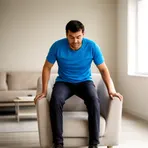
To stand up from sitting or lying down
Antonyms

How Early

Surface Forms
Morphology
get + up
The meaning 'to put on special clothing' is related to the idea of preparing or making oneself ‘up’, so there is a partial link between 'get' (become/prepare) and the particle 'up' (finish/intensify). However, the primary and more common sense of 'get up' is 'rise from bed', and the dressing sense is less predictable (often requires preposition 'in' or contextual cues), so a B1 learner who only knows the literal constituents is unlikely to reliably infer this specific sense without exposure.
Etymology
Get up comes from the simple image of moving upward from bed: you push off the covers and make yourself get up out of the sheets. That's why it means 'to rise from bed'.