

gender
 56
4.2
56
4.2

- noun
- /ˈdʒɛndər/
- Specialized
- We don't tolerate gender bias in this house.
- gender classes
- gender-neutral
Loading YouTube…
Watch on YouTubeYou can change the age, gender, number of a character.
- You can change the age, gender, number of a character.
- A noun and all its modifiers must agree in gender, case, and number.
- Currently Michael, the Church of England is looking at using gender neutral pronouns for God.
Examples
-
In many languages, nouns must agree with their corresponding gender for proper grammatical structure.
-
It's like a third gender.
-
The entire female gender is separated into two groups.
-
And I decided to focus explicitly on gender classification.
-
A noun and all its modifiers must agree in gender, case, and number.
-
Participant information, including age, gender, and VC, appears in Table 1.
Academic text (2011) -
In 1985, Parliament amended the act to remove more than 100 years of legislated gender discrimination.
Fiction book (2002) -
Information was obtained for each student describing age, gender, grade, ethnicity, and eligibility for gifted services.
Academic text (1999) -
The link to the surveys was sent to schools with single-gender classrooms.
Academic text (2011) -
The majority of the teachers report that participating in single-gender classrooms improved males' behavior, participation, and attitude toward school.
Academic text (2011)
Synonyms


 1
7.7
1
7.7
A system in some languages that puts nouns into groups like masculine or feminine
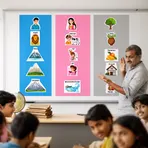
The gender of a noun in Sanskrit, like masculine or feminine
Idioms

- Literature
1
8.0
To mention someone's gender to gain an advantage in a discussion

- Literature
To mention being a woman or man to avoid blame and get sympathy
Compounds


 1
4.4
1
4.4
Different ways people understand and show themselves as male, female, both, or neither
- Specialized
1
7.7
A system in some languages that puts nouns into groups like masculine or feminine

Surface Forms
Etymology
Gender comes from the old root gen- meaning 'kind' or 'birth', the same root you see in generate and gene. In grammar it means a 'kind' of noun, so masculine, feminine or neuter are simply different 'kinds' of words.