
gauntly
- adverb
- /ˈɡɔntli/
- Literature
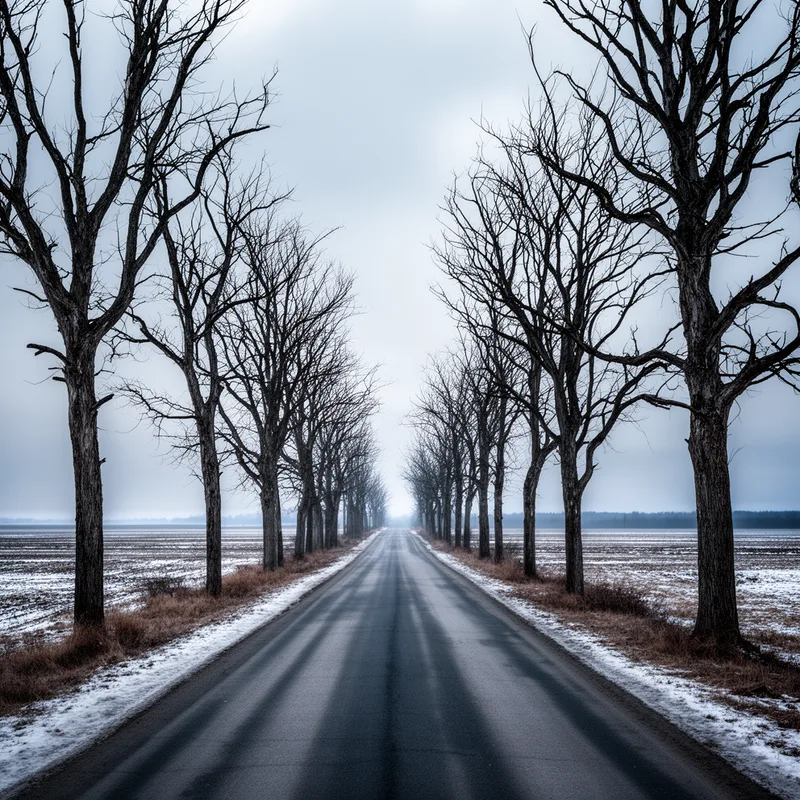
- The old trees stood gauntly along the deserted road, their branches bare against the winter sky.
Examples
-
He walked gauntly through the abandoned village.
-
He stared gauntly at the empty plate, his face shadowed by hunger and fatigue.
-
The mountain rose gauntly above the valley, its rocky slopes untouched by vegetation.
-
The trees stood gauntly against the winter wind.
-
The landscape lay gauntly across the horizon, casting a somber mood over the valley.
-
His gauntly demeanor suggested that he had been through many hardships in life.
-
The trees stood gauntly against the gray sky, their bare branches stretching toward the bleakness.
Synonyms

 27
5.5
27
5.5

In a serious and determined way without showing any joy
 2
6.2
2
6.2
In a way that shows no hope or cheer


 1
7.5
1
7.5
In a way that shows great loneliness and sadness
Antonyms


How Bleak

Surface Forms
Morphology
Etymology
Gauntly comes from the old word gaunt, which means 'thin' or 'bare'. Think of leafless trees or a cold, empty place — that bare, thin look is why gauntly describes something bleak or severe.