
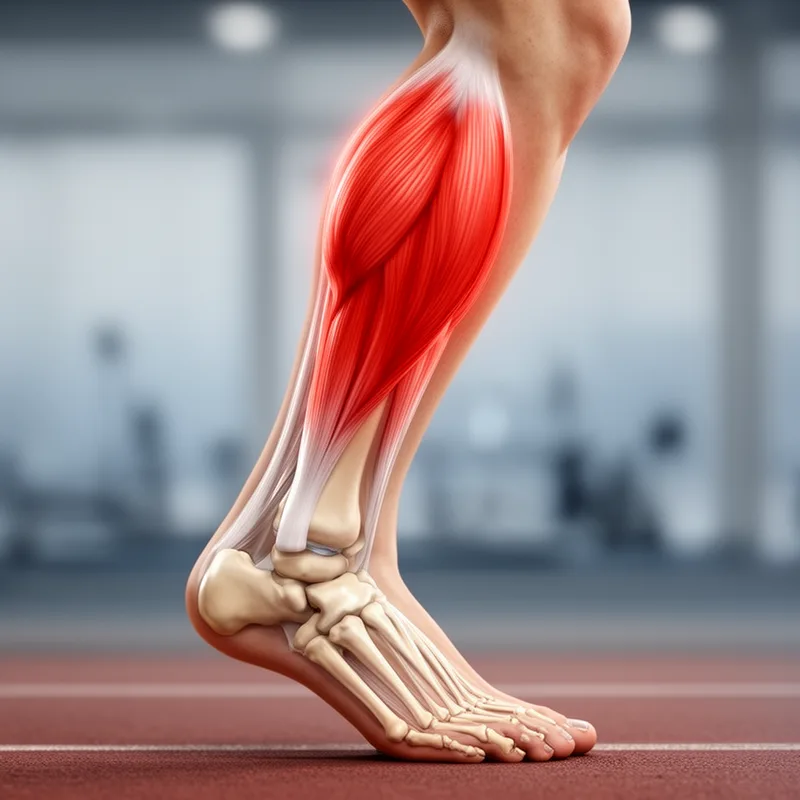
gastrocnemius
 1
9.4
1
9.4

- noun
- /ˌɡæstrəkˈnɛmɪəs/
- Specialized
- Six test locations were used, arranged in two columns over the medial and lateral heads of the gastrocnemius.
- gastrocnemius muscle
- lateral gastrocnemius
- medial gastrocnemius
Examples
-
During stance, the gastrocnemius, biceps, vastus, rectus, and gluteus medius muscles were active to secure body weight loading and forward displacement.
Academic text (2000) -
Physical therapists often emphasize stretching the gastrocnemius to prevent lower leg injuries.
-
The back curve of her gastrocnemius is very curvy in the front.
-
From the result, an increase in the cross-sectional area at the gastrocnemius muscle group was observed.
Academic text (2001) -
When we take off the gastrocnemius, underneath it is a muscle called the soleus.
-
The study found that HMB increased muscle wet weight of the gastrocnemius and lowered protein degradation relative to control animals.
Blog text (23) -
Intriguingly enough, it was found that HMB supplementation also increased protein synthesis in the gastrocnemius.
Blog text (23) -
The knee joint depends upon the dynamic stabilizers of the quadriceps, hamstrings, and gastrocnemius muscles for gliding and smooth function.
Academic text (2002) -
The gastrocnemius muscle is crucial for activities like running and jumping as it helps flex the foot downward.
-
Strength training often targets the gastrocnemius to improve calf muscle performance during sports.
Synonyms

A large muscle at the back of the lower leg that lifts the heel when you stand on tiptoe
Compounds
- Specialized
A large muscle at the back of the lower leg that lifts the heel when you stand on tiptoe
Surface Forms
Morphology
gastrocnemius = gastro + cnem + ius
Although built from classical combining forms (gastro- 'stomach' + cnem- 'leg'), the medical/Latinized name refers specifically to the calf muscle and this meaning is not derivable by an average B1 learner from the parts.
Etymology
Gastrocnemius comes from Greek parts gastro- meaning 'stomach' or 'belly' and -cnemius meaning 'leg' or 'calf'. It was named because this muscle makes a rounded 'belly' on the back of the lower leg, so gastrocnemius is the large calf muscle that helps point the foot down.