

gas helmet
- noun
- /ɡæs ˈhɛlmɪt/
- Archaic
- During World War I, soldiers were issued a gas helmet to protect themselves from chemical attacks.
Examples
-
Unlike modern masks, the gas helmet covered the entire head and was less effective against certain gases.
-
The museum exhibits an original gas helmet used in early chemical warfare.
-
The soldier wore a gas helmet during the attack.
-
Many gas helmets were issued to troops in World War I.
-
During World War I, soldiers were issued a gas helmet to protect themselves from chemical attacks.
-
The museum exhibits an original gas helmet that was used to shield against toxic gases in early chemical warfare.
-
Many soldiers wore gas helmets during battles to safeguard their lungs and faces from poisonous air.
Synonyms
 9
5.2
9
5.2

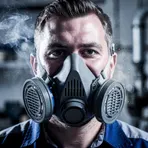
A device worn over the nose and mouth that filters smoke, dust, and gases from the air you breathe

A face cover with a filter that stops poisonous gases reaching your lungs
Surface Forms
Morphology
The meaning 'a protective head covering designed to guard against poisonous gases' is directly and transparently derived from combining 'gas' (a gaseous/poisonous substance) with 'helmet' (a protective covering for the head). This simple noun–noun compounding follows common cross-linguistic patterns, so an average B1 learner who knows both constituents would readily infer the MWE's meaning.
Etymology
Gas helmet comes from World War I when soldiers put on a heavy, helmet-like mask that covered the whole head to keep out poisonous gas. Because it looked like a helmet that 'protected' against gas, the name came to mean a protective mask.