
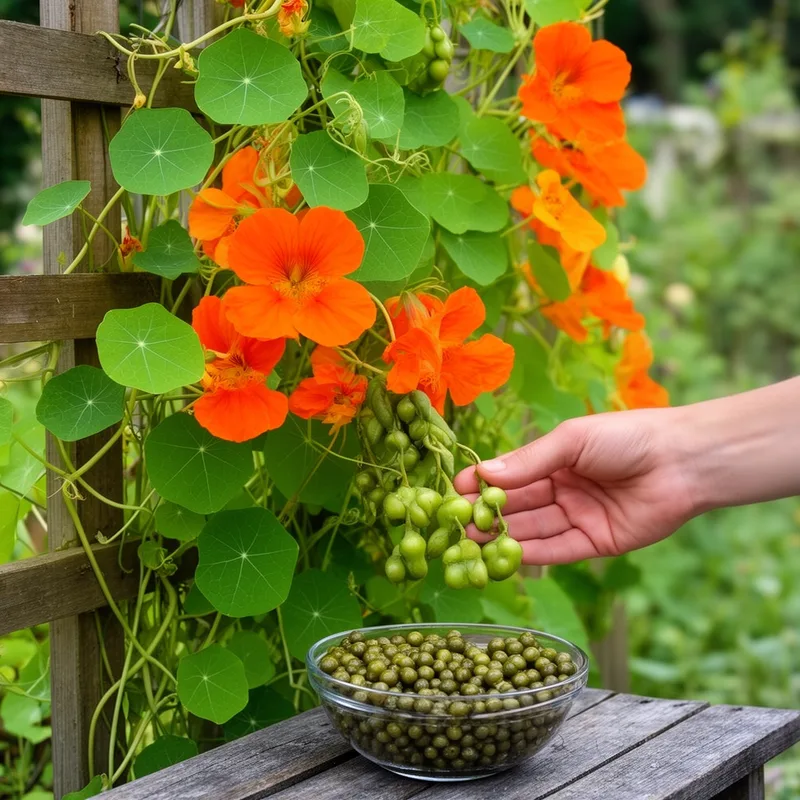
garden nasturtium
- noun
- /ˈɡɑrdən næˈstɜrʧəm/
- Children enjoyed watching the bright orange blooms of the garden nasturtium climb the garden fence.
Examples
-
Some chefs use the seeds of the garden nasturtium as a substitute for capers in recipes.
-
The garden nasturtium adds a burst of color to any summer flower bed.
-
The garden nasturtium adds vibrant color to my backyard.
-
I love the bright blooms of garden nasturtiums in spring.
-
Children enjoyed watching the bright orange blooms of the garden nasturtium climb the garden fence.
-
Some chefs use the seeds of the garden nasturtium as a substitute for capers in recipes.
-
The garden nasturtium adds a burst of color to any summer flower bed.
Synonyms

 2
8.4
2
8.4

A plant with round leaves and bright edible flowers used in salads and cooking

A fast-growing climbing plant with large orange or yellow flowers and pickled seeds you can eat

A fast-growing climbing plant with bright orange flowers and edible seeds used like capers

A garden plant that has bright, round, often edible flowers
How Edible

Surface Forms
Morphology
The phrase is a straightforward noun–noun compound where 'garden' (a place for cultivating) modifies 'nasturtium' (a flowering plant), so the meaning 'a nasturtium cultivated or growing in a garden' is directly derivable from the parts. This compositional pattern is common in English and cross-linguistically familiar, so a B1 learner who knows both constituents would understand the MWE.
Etymology
Garden nasturtium probably comes from old Latin words meaning 'twisted nose'. People used the name because the nasturtium's leaves and seeds taste strong and peppery and can make you wrinkle your nose, so the name fits this bright, edible garden flower.