
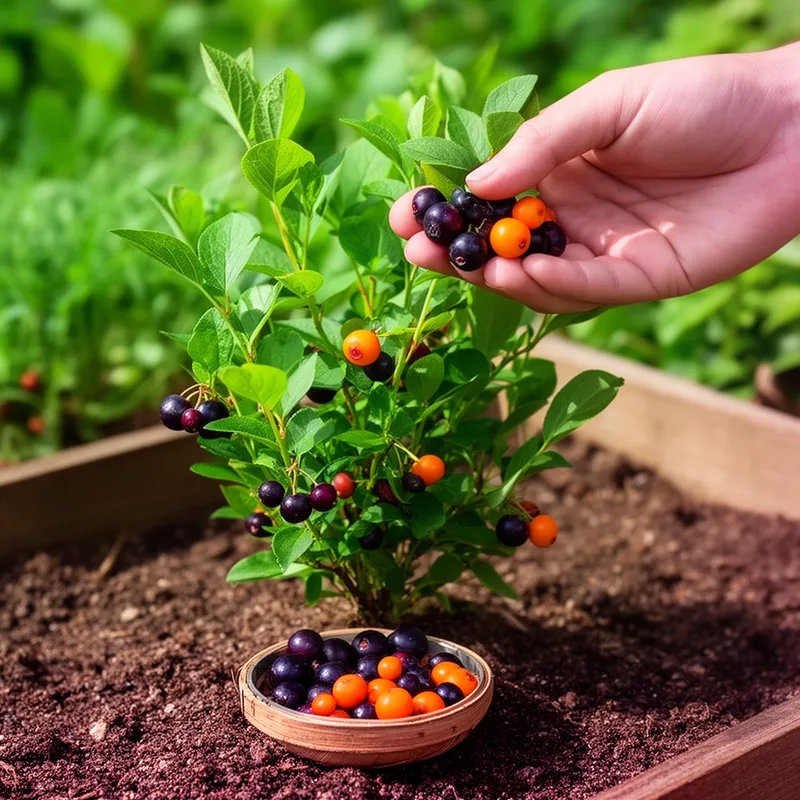
garden huckleberry
- noun
- /ˈɡɑrdən ˈhʌkəlˌbɛri/
- US
- Many gardeners grow garden huckleberry for its small, dark berries used in jams and pies.
Examples
-
The garden huckleberry thrives in warm climates and produces fruit late in the season.
-
Before eating garden huckleberry, it is important to ensure the berries are fully ripe.
-
The garden huckleberry is a unique fruit.
-
I love the taste of garden huckleberries.
-
Many gardeners grow garden huckleberry for its small, dark berries used in jams and pies.
-
Before eating garden huckleberry, it is important to ensure the berries are fully ripe.
-
The garden huckleberry thrives in warm climates and produces fruit late in the season.
Synonyms


 1
9.9
1
9.9
A garden plant people grow for its small orange or black edible berries
A small edible berry from a garden plant that turns orange or black when ripe
A garden plant like black nightshade with small edible orange or black berries
A garden plant grown for its small edible orange or black berries

A garden plant with small edible orange or black berries
Surface Forms
Morphology
This is a straightforward noun–noun compound where 'garden' modifies 'huckleberry' to indicate a cultivated or garden-grown variety; the meaning (a huckleberry grown in a garden) is directly derivable from the constituents. The modifier+head composition is a common, cross-linguistic pattern in English, so a B1 learner who knows both words will readily understand it.
Etymology
Garden huckleberry: one popular story says gardeners saw a small berry in their gardens that looked like a huckleberry, so they called it a 'garden huckleberry'. The name joins garden and huckleberry to show it is a berry 'grown' in gardens, and that's why it now means a garden plant with small dark or orange berries.