
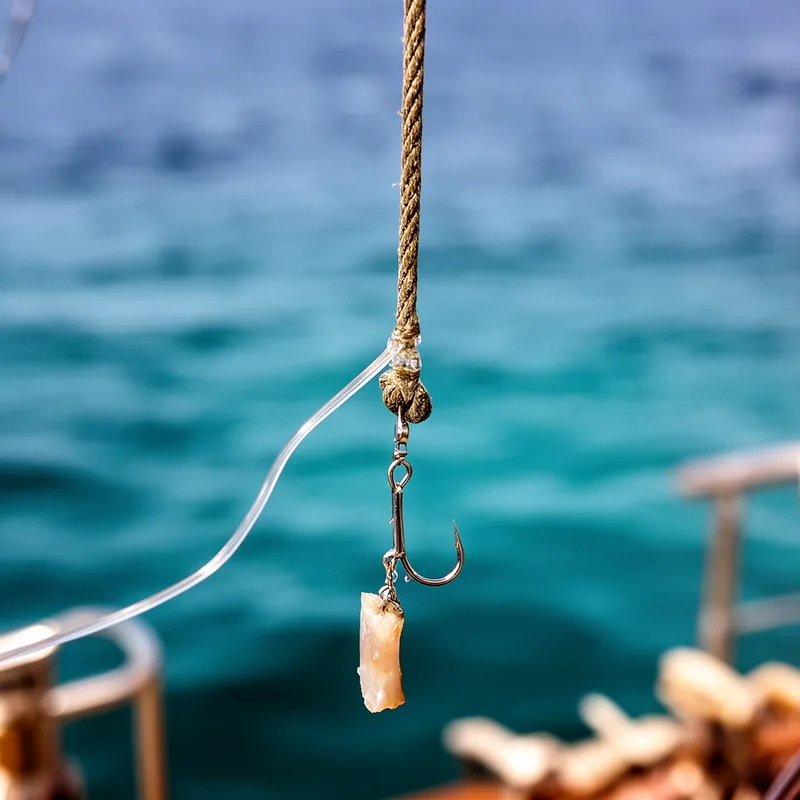
gangion


 1
9.9
- noun
- /ˈɡæn.dʒən/
- Specialized
- A variety of gangions are used in different fishing techniques to improve catch rates.
- monofilament gangions
- steel gangions
Examples
-
He tied the hook to the gangion before lowering the line into the water.
-
Based on this information, we added monofilament gangions to the standard longline rig as a way to increase catches without a substantial increase in effort.
Academic text (1993) -
Hereafter, these gangions are referred to as "steel" gangions.
Academic text (1993) -
Over the 2-year period, catch rates were significantly higher on monofilament gangions.
Academic text (1993) -
A standard longline consisted of 10-20 gangions placed at 15.2 m intervals along the mainline.
Academic text (1999) -
Overall, catch rates for the miscellaneous coastal species were higher on monofilament gangions, whereas catch rates for the miscellaneous offshore species were higher on steel gangions.
Academic text (1993) -
Following each soak period, the longline was checked, and all gangions that had caught sharks, been broken or damaged, or had damaged or lost baits were removed from the mainline, and a fresh-baited gangion was attached.
Academic text (1999) -
During the 1970s, the commercial fishing industry replaced "Yankee" gangions with monofilament gangions because catch rates for swordfish and tuna were much higher using the latter gear (Berkeley et al., 1981).
Academic text (1993) -
The fisherman replaced the old hooks with new ones attached to fresh gangions.
Surface Forms
Etymology
Gangion comes from old fishing language for a short line used to join a hook to the main line, so it began as a word for a small connecting piece on a fishing rope. Think of it as a little 'link' or 'connector' in the gear, which is why a gangion is the short piece of line that holds a hook.