
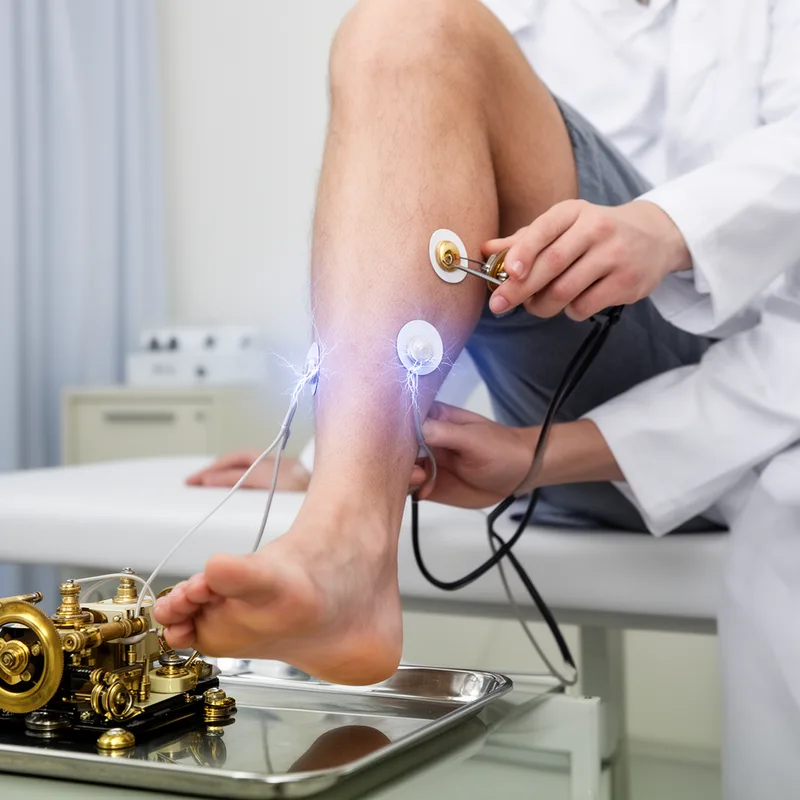
galvanism


 1
9.5
1
9.5
- noun
- /ˈɡælvəˌnɪzəm/
- Archaic
- In the nineteenth century, galvanism was considered a promising treatment for paralysis.
Examples
-
The doctor recommended galvanism for muscle rehabilitation.
-
Many doctors were fascinated by the apparent healing powers of galvanism in restoring movement to paralyzed limbs.
-
Early experiments with galvanism led to important discoveries about how nerves and muscles respond to electricity.
-
Many patients find galvanism helpful for pain relief.
-
In the 19th century, doctors used galvanism to treat patients with muscle injuries by applying electric currents.
-
The therapist recommended galvanism to help stimulate the nerves in my injured leg.
-
After undergoing galvanism, the patient's muscle strength improved significantly over several sessions.
Synonyms
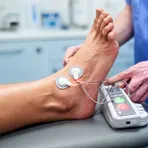
Using a direct electric current to make nerves or muscles move

A medical treatment that uses small electric currents on the body to help heal injuries

To use small electric currents on the body to help heal injuries or nerve problems

A medical treatment that uses electricity to help injured nerves and muscles
Surface Forms
Morphology
galvanism = Galvani (opaque) = galvan + ism
Formed from the eponym 'Galvani' plus '-ism'; the therapeutic sense is a specialized extension that cannot be derived from general morpheme meanings.
Etymology
Galvanism comes from the Italian scientist Galvani, who used electric sparks to make frog legs twitch, and it shares the same root as galvanize. That's why galvanism can mean the medical use of electricity to 'stimulate' nerves and muscles.