
galactosidase


 1
7.9
- noun
- /ɡəˌlæktəˈsaɪdeɪz/
- Specialized
- PHOTO (COLOR): Plant physiologist Ken Gross examines tomato fruit used in the beta-galactosidase genetic engineering research program.
- beta-galactosidase
Examples
-
This is the gene for beta galactosidase and another gene called lack Y and lack Z.
-
According to Smith, these enzymes include a group called beta-galactosidases.
Academic text (1998) -
Now, I told you before that beta galactosidase was a cytoplasmic protein, and it is, but it's a tetramer.
-
In case of doubt, beta-galactosidase assays can be used to assess the induction of aging processes in the respective cells.
Blog text (4) -
He has identified and cloned a family of seven beta-galactosidase genes in tomatoes that include the gene responsible for degrading cell wall structure.
Academic text (1998) -
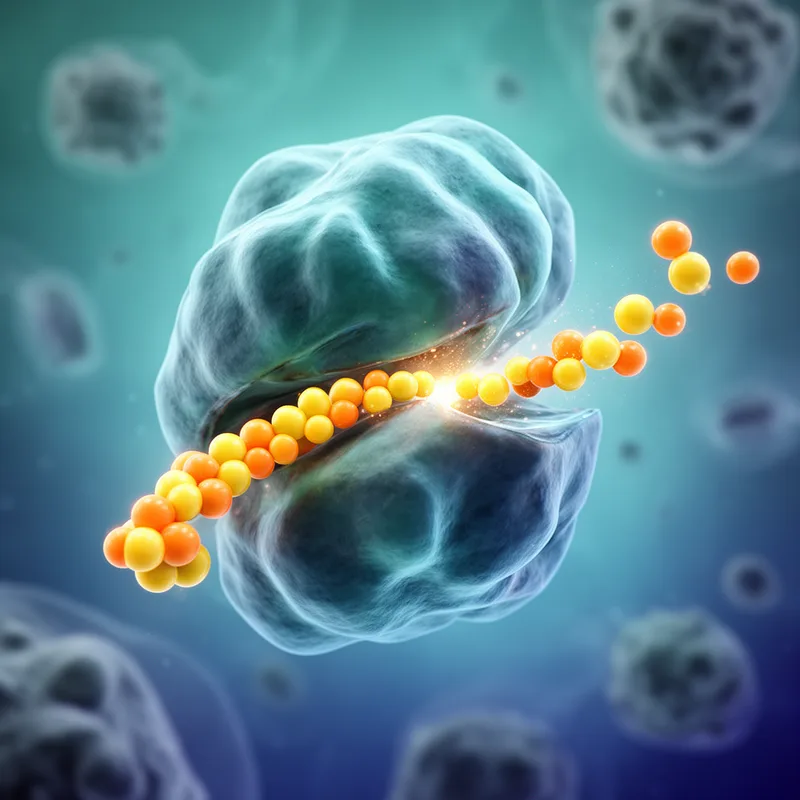
The enzyme galactosidase is essential for breaking down complex sugars in the digestive system.
-
Researchers found that the galactosidase enzyme plays a vital role in the metabolism of lactose in cells.
-
The genetic engineering of bacteria often involves inserting genes that code for galactosidase to facilitate sugar breakdown.
Surface Forms
Morphology
galactosidase = galactoside (semi-transparent) = galactoside + ase
Formed by the standard enzyme suffix '-ase' attached to 'galactoside'; the morphological formation is regular in scientific vocabulary but the components are technical and likely unfamiliar to general learners.
Etymology
Galactosidase comes from the Greek part galact- meaning 'milk' and the enzyme ending -ase, and is related to galactose, the 'milk' sugar. So galactosidase is the enzyme that 'breaks down' those milk sugars in the body.