
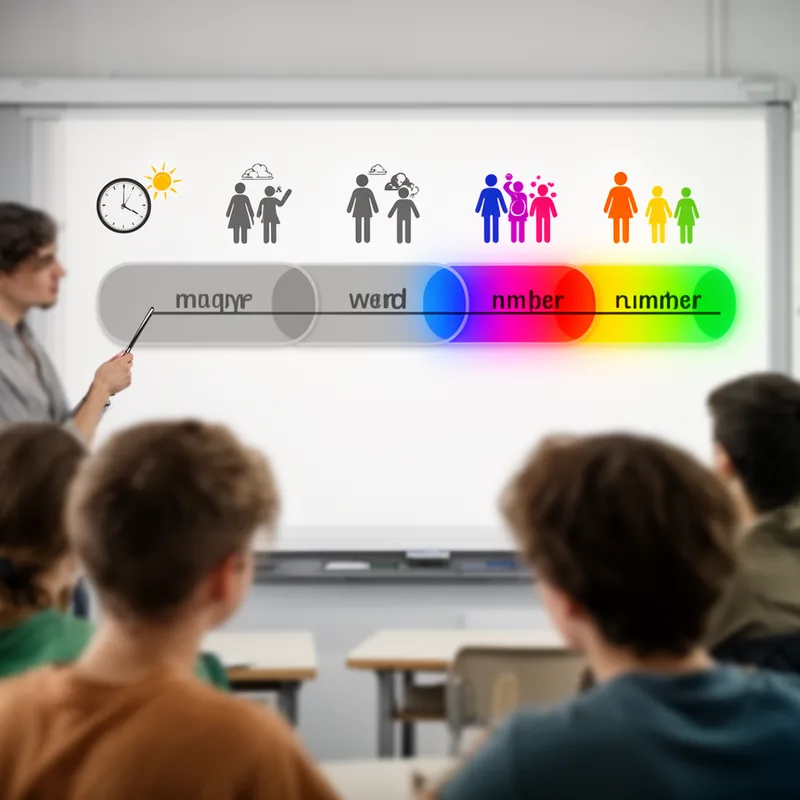
fusional
- adjective
- /ˈfjuːʒənl/
- Specialized
- In a fusional language, a single word ending can show several grammatical features at once.
Examples
-
Russian is a fusional language because its nouns change endings for case and number.
-
Spanish is a fusional language with complex verb conjugations.
-
Many European languages are considered fusional due to their complex verb conjugations.
-
Latin is known for its fusional morphology.
-
In a fusional language, a single word ending can express multiple grammatical relationships, such as tense and case.
-
Russian is a fusional language because its nouns change form to indicate both number and case.
-
Many European languages, like German and Greek, are labeled as fusional for their intricate system of verb conjugation.
Synonyms

About changes in a word's form that show tense, number, or case

Using word endings to show tense, case, or number instead of separate words
Antonyms



Compounds

- Specialized
A language where one part of a word shows several grammatical meanings like tense and number
How Fusional
- Specialized

- Specialized
- Specialized
- Specialized
 1
8.8
1
8.8
Surface Forms
Morphology
Etymology
The word fusional comes from the same idea as fuse and fusion, which mean 'to melt' or 'to join'. In grammar, a fusional language 'melts' several grammatical meanings into one word ending, so a single ending can show tense, number, or case at the same time.