
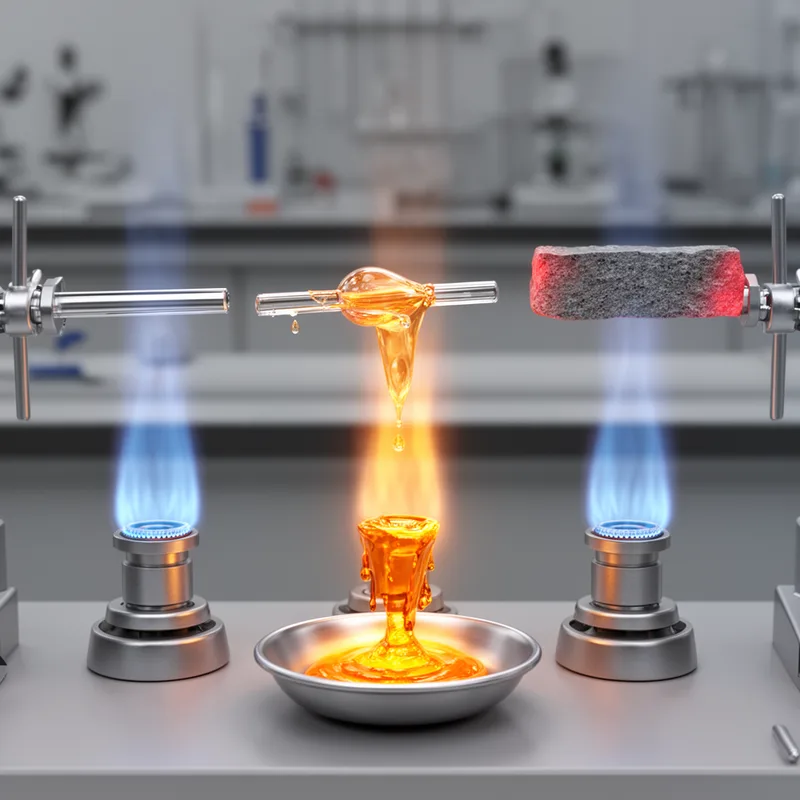
fusibility


 1
8.3
- noun
- /ˌfjuzəˈbɪlɪti/
- Specialized
- The engineer studied the fusibility of various plastics to determine which could be easily molded into new shapes.
Examples
-
The fusibility of metals like gold and silver makes them ideal for casting intricate jewelry.
-
Meister Boerhave speaks on some adept whose name is long forgotten that brought up suroxydized muriate of quicksilver, promising to catalogue the fusibility of minerals.
Fiction book (1991) -
Fusibility of map algebra operations
Academic text (2018) -
The architecture of the parallel devices affects the fusibility as well.
Academic text (2018) -
The GPU architecture does not allow the use of global barriers within kernels, and can only synchronize at a local scope, limiting the fusibility.
Academic text (2018) -
Table 1 lists the validity of pipe fusion and flat fusion for each pair of map algebra classes; that is, it lists their fusibility. These rules originate from the application of parallel programming to the map algebra patterns and may be inferred by inspection.
Academic text (2018) -
Understanding the fusibility of different materials is crucial when designing efficient electrical systems.
Synonyms
 1
7.7
The ease with which something becomes liquid when heated
Surface Forms
Morphology
Etymology
The word fusibility comes from the common word fuse, which goes back to the Latin fundere, meaning 'to pour' or 'to melt', and you can see the same root in fusion. So, fusibility is how easily a material can be melted or joined by heat.