
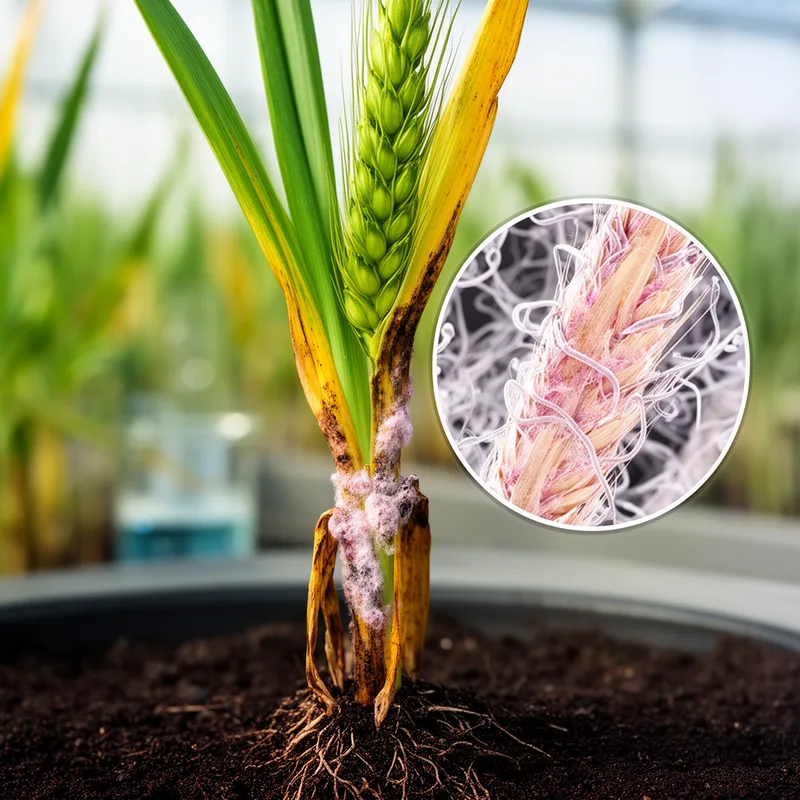
fusarial
- adjective
- /fjuˈzɛəriəl/
- Specialized
- In agriculture, fusarial pathogens can cause significant crop damage, particularly in cereals and other grains.
Examples
-
Onychomycosis is usually caused by Candida spp. and dermatophytes (12), but fusarial onychomycosis is a known clinical entity (13).
Academic text (2013) -
The usual portal of entry is the airways, and IF is thought to be acquired by the inhalation of aerosols of fusarial conidia.
Academic text (2013) -
The researchers discovered that fusarial infections are often resistant to common antifungal treatments.
-
Farmers must be vigilant about fusarial diseases that can affect the yield of their crops.
Synonyms

 22
4.3

Related to living things like mould or mushrooms
Surface Forms
Morphology
fusarial = Fusarium (semi-transparent) = Fusarium + al
The adjective is formed directly from the scientific genus name 'Fusarium' plus the productive suffix '-al', but the base term is specialized vocabulary that most learners are unlikely to know.
Etymology
Fusarial is named after the fungus Fusarium, whose name comes from the Latin fusus meaning 'spindle' because parts of the fungus look long and thin. So, fusarial describes infections or diseases caused by a Fusarium fungus.