
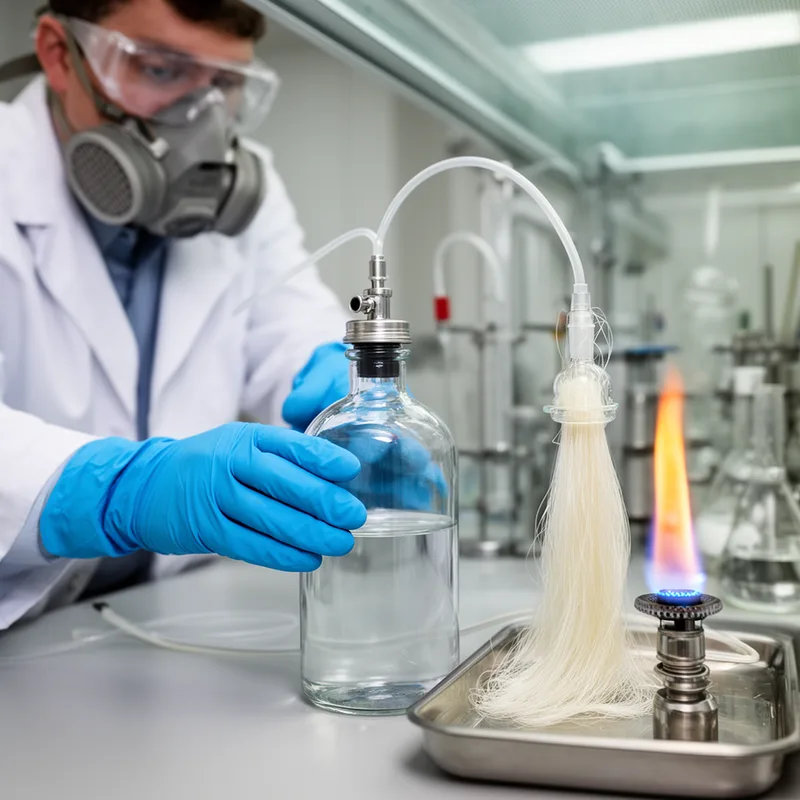
furan


 1
9.9
- noun
- /ˈfjʊərən/
- Specialized
- Frying at high temperatures can trigger the development of potentially toxic dioxins and furans in food.
- furan emissions
- furan emission limit
Examples
-
Removing chlorine donors to prevent dioxin and furan formation cannot be realistically achieved at this time.
-
Also, emission levels of chlorinated dioxins and furans are compared with emission levels of two common combustion sources.
Academic text (1995) -
And that piece is called a furan cleavage site.
-
Where they had been part of an application to insert a furan cleavage site able to infect human cells.
-
Removing chlorine donors to prevent dioxin and furan formation cannot be realistically achieved at this time.
Academic text (1993) -
EPA also estimates that 70% of the annual dioxin and furan emissions will be eliminated and that mercury emissions will be cut by 55%.
Academic text (2001) -
Because dioxins and furans condense onto fly ash, they are removed by air pollution controls that remove particulate matter.
Academic text (2001) -
In addition, organic compounds (including dioxins and furans) and trace heavy metals can be absorbed onto PM and emitted.
Academic text (1993) -
One drawback to RDF facilities is that they emit twice the quantity of dioxins and furans as mass-burn facilities.
Academic text (1993) -
In chemical manufacturing, furan is valued for its distinctive ether-like odor and flammability.
Synonyms
A clear poisonous liquid that can catch fire and people use to make nylon and other chemicals
Surface Forms
Etymology
Furan takes its name from the older chemical name furfural, which comes from the Latin furfur meaning 'bran', because chemists first made this chemical from grain bran. So, the name helps you remember that furan comes from plant or food material and explains why it can appear in heated foods and is used to make nylon.