
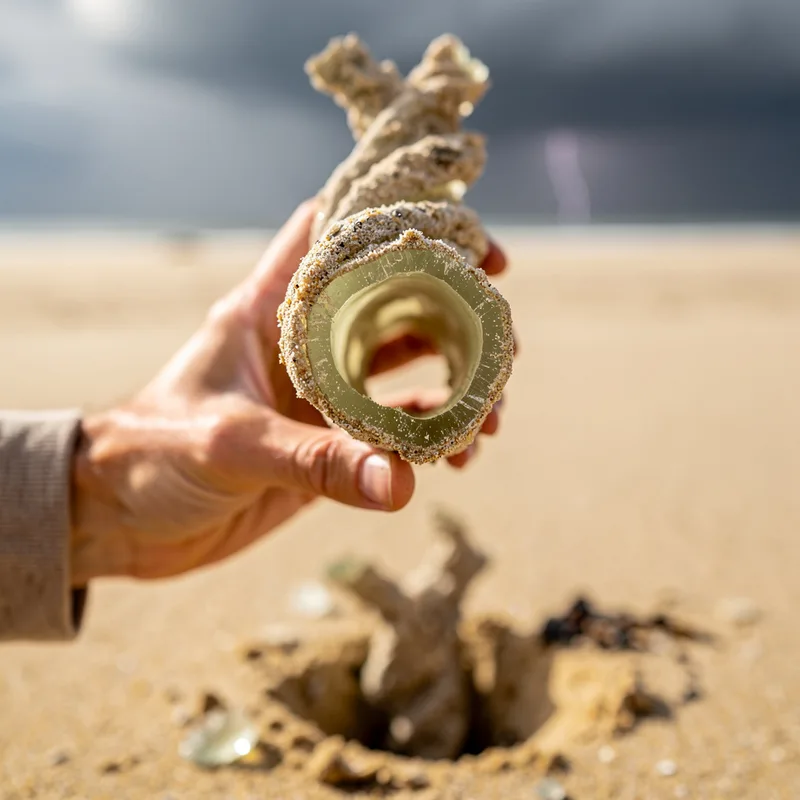
fulgurite
 1
9.9

- noun
- /ˈfʌlɡəˌraɪt/
- Specialized
- A fulgurite forms when lightning strikes the sand, creating a glassy tube-like structure.
Examples
-
The museum displayed a rare fulgurite that had formed after a powerful thunderstorm.
-
Walking along the beach, she discovered a small fulgurite hidden among the sand dunes.
-
Scientists studied the structure of the fulgurite to learn more about the effects of lightning on minerals.
-
The fulgurite was found near the beach.
-
Have you ever seen a fulgurite before?
-
When exploring the beach, I found a unique fulgurite formed by a recent storm.
-
The scientist explained how fulgurites are created during intense lightning strikes on sandy soil.
Synonyms

A natural clear glass made mostly of sand when lightning or meteors melt it
Surface Forms
Morphology
fulgurite = fulgur + ite
The element 'fulgur' is a Latin combining form meaning 'lightning' and is not a familiar standalone English word to learners, while the suffix '-ite' denotes a mineral/rock; the historical composition is correct but not derivable by an average B1 learner.
Etymology
Fulgurite comes from the Latin fulgur meaning 'lightning' and the ending -ite meaning 'stone', as in other mineral names like graphite. So a fulgurite is a 'lightning stone', a glass tube formed when lightning melts and fuses sand or soil.