
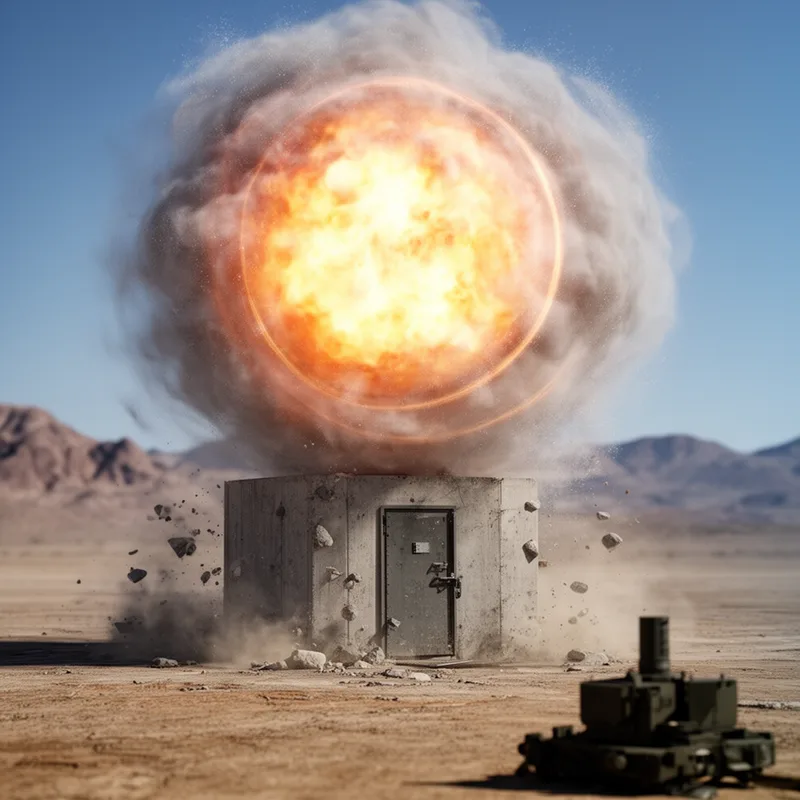
fuel-air explosive
 1
7.3
1
7.3

- noun
- /fjul-ɛr ɪkˈsplosɪv/
- Specialized
- Developers are experimenting with new types of fuel-air explosives that could minimize collateral damage.
- use fuel-air explosive
Examples
-
Arm and deploy fuel-air explosives.
-
Combat Control instructs arm and deploy fuel-air explosives.
-
Fuel-air explosives can provide firepower as destructive as small nuclear weapons.
Academic text (1991) -
Fuel-air explosives, or FAE for short, are a type of gas bomb involving two detonations.
Academic text (1991) -
The military used a fuel-air explosive to create a powerful blast that could destroy enemy fortifications.
-
During the operation, the team deployed fuel-air explosives to clear the battlefield effectively.
Synonyms
 2
9.9
2
9.9
A weapon that spreads fuel in the air and then lights it to make a very large blast


 1
8.4
1
8.4
A bomb that spreads fuel into the air and then explodes to make a very large blast
A weapon that sprays flammable liquid into the air then sets it on fire to make a large explosion

A bomb that spreads fuel into the air and then sets it on fire to make a very large explosion

A weapon that spreads fuel into the air and then sets it on fire, causing a very large blast
Surface Forms
Morphology
fuel-air + explosive
The noun is transparently compositional: it literally denotes an explosive that uses fuel and air (fuel + air + explosive), so a learner knowing those words can infer it is a device that disperses fuel into the air and detonates. Although technical, the mechanism is directly expressed by its constituents and follows ordinary compounding logic, making the meaning accessible to a B1 learner.
Etymology
The name fuel-air explosive tells you how it works: it spreads fuel into the air and then explodes. So it means a 'weapon' that makes a very large blast by burning a cloud of fuel in the air.