
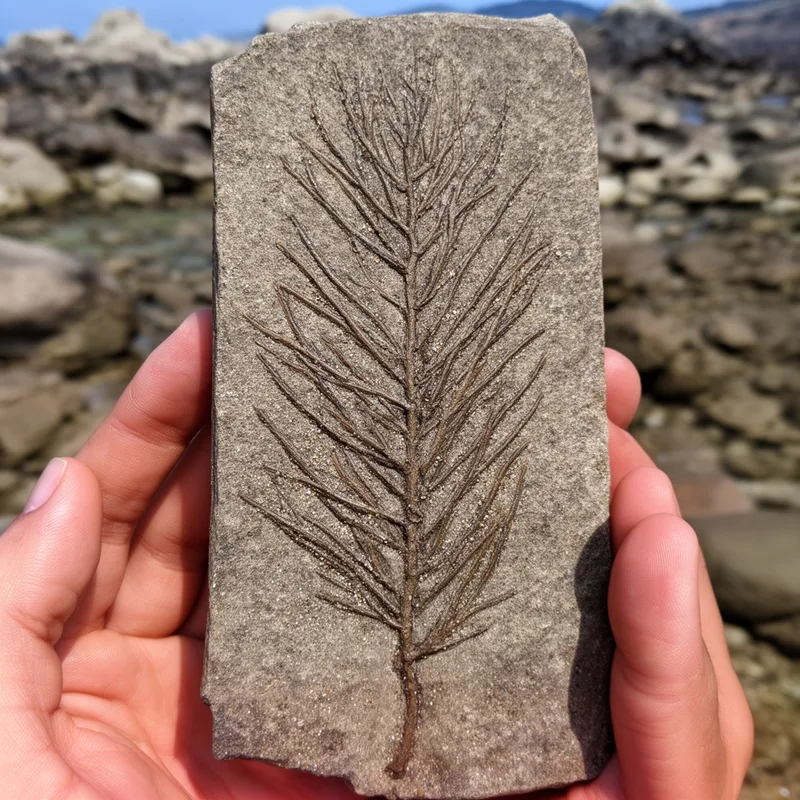
fucoid
- noun
- /ˈfjuːkɔɪd/
- Specialized
- Ancient rocks in the region often contain fucoid markings, evidence of prehistoric algae.
Examples
-
Some geologists once mistook ripple marks for fucoids, confusing them with fossilized seaweed.
-
The fucoid fossils were discovered in the coastal cliffs.
-
The paleontologist carefully studied the fucoid to learn about ancient ocean life.
-
Many fucoids can be found in sedimentary rock layers.
-
The paleontologist carefully studied the fucoid fossils to learn about ancient ocean life.
-
Ancient rocks in the region often contain fucoid markings, evidence of prehistoric algae.
-
The fucoid fossils were discovered in the coastal cliffs, revealing insights into past marine ecosystems.
Compounds
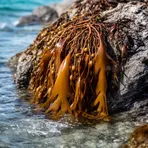
Surface Forms
Morphology
fucoid = fucus (opaque) = fuc + oid
The word is formed from 'fucus' (a genus of seaweed) and '-oid', but 'fucus' is not a familiar English word, so the meaning is not transparent to most learners.
Etymology
Fucoid comes from the Latin fucus, meaning 'seaweed', and the ending -oid, meaning 'like', as in humanoid or asteroid. So a fucoid fossil is a mark or cast 'like' seaweed left in rock, which is why geologists call seaweed impressions by this name.

