
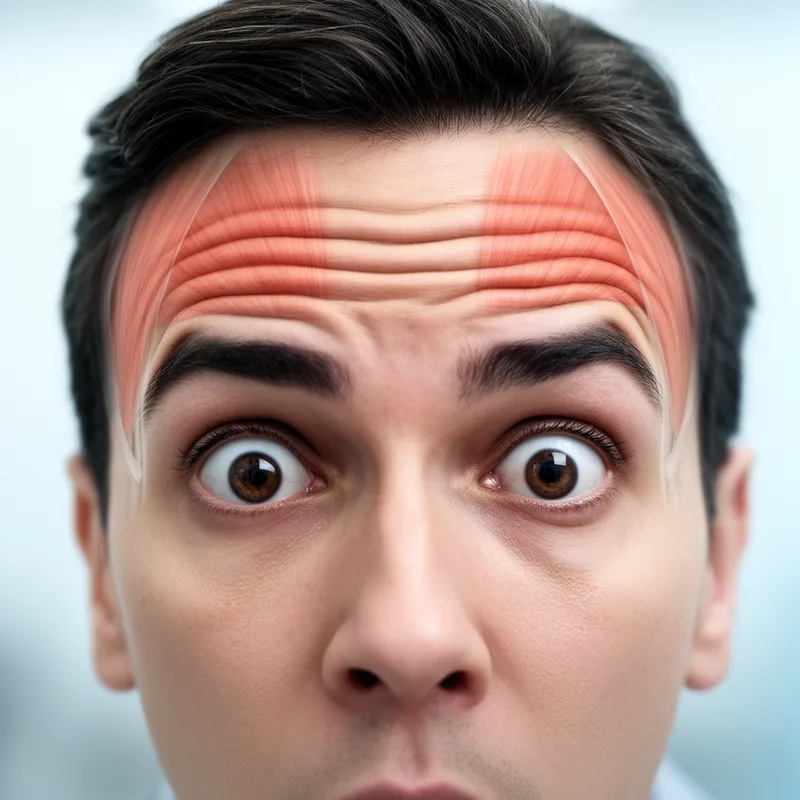
frontalis


 1
7.8
- noun
- /frʌnˈtælɪs/
- Specialized
- Findings on neurologic examination were within normal limits except for weakness of the frontalis muscle.
- frontalis muscle
Examples
-
EMG 1 included three sensors placed on the forehead to monitor muscle tension in the frontalis muscle.
Academic text (2008) -
The lesion was excised with 3 mm around all sides down to the frontalis muscle.
Academic text (2012) -
There were also significant differences between the first and second music conditions for both masseter and frontalis muscles.
Academic text (2008) -
A comparison of the mean difference between the same conditions with paired-samples t-tests for the frontalis muscle is presented in Table 3.
Academic text (2008) -
The mean difference between the silence and music conditions was not significant in the frontalis response (EMG 1) for the first or second exposure.
Academic text (2008) -
They found that deceptive pleaders raised their forehead muscles, called the frontalis, which gave off surprised expressions.
Blog text (10) -
Dependent measures included: heart rate, body temperature, electrodermal activity (sweating), and facial muscle tension (frontalis and masseter muscles).
Academic text (2008) -
Electroneurography showed a 98% weakness compared to the other side, and electromyography revealed fibrillation potentials in the oculi, frontalis, and oris muscles.
Academic text (2008) -
The frontalis muscle helps in raising the eyebrows and wrinkling the forehead.
-
When he frowned, the frontalis muscle contracted, making his forehead crease.
Compounds


- Specialized
A line where the two halves of the front skull bone meet that usually closes by age six
Surface Forms
Morphology
Etymology
Frontalis comes from the Latin word frons, meaning 'forehead', and is related to the English word front. So frontalis is the muscle 'of the forehead', which is why it lifts the eyebrows and makes forehead wrinkles.