

freshwater cordgrass
- noun
- /ˈfrɛʃˌwɔːtər kɔrdˌɡræs/
- Specialized
- The wetland restoration project included planting freshwater cordgrass to stabilize the riverbanks.
Examples
-
Researchers noticed that freshwater cordgrass supports a diverse array of insects and birds in marsh ecosystems.
-
Unlike its saltwater relatives, freshwater cordgrass thrives in non-saline wetlands.
-
The freshwater cordgrass thrives in wetlands.
-
Many species depend on freshwater cordgrass for habitat.
-
The wetland restoration project included planting freshwater cordgrass to stabilize the riverbanks.
-
Researchers noticed that freshwater cordgrass supports a diverse array of insects and birds in marsh ecosystems.
-
Unlike its saltwater relatives, freshwater cordgrass thrives in non-saline wetlands.
Synonyms

A tall grass that grows in North American salt marshes

A tall marsh grass with dry leaf edges and seeds with long hairs

A tall coarse grass that grows in prairies and wetlands and shelters birds and small animals

A group of grasses that grow in freshwater swamps and salt marshes
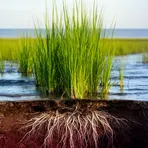
A tall grass that grows in marshes near the sea and helps hold the soil
Surface Forms
Morphology
The noun phrase is compositionally transparent: 'freshwater' specifies the habitat (non-salty water) and 'cordgrass' names a particular grass, so a learner who knows both words can infer it is a type of cordgrass that lives in freshwater. Specific botanical details in the definition are technical, but the basic referent (a cordgrass species found in fresh water) is directly derivable from the constituents.
Etymology
Freshwater cordgrass gives an easy picture: freshwater means it grows in 'not salty' water, and cordgrass suggests long, strong stems and roots that hold mud together like a 'cord'. So the name means a cord-like grass that lives in fresh water, which helps you remember its habitat and why it helps hold riverbanks.

