
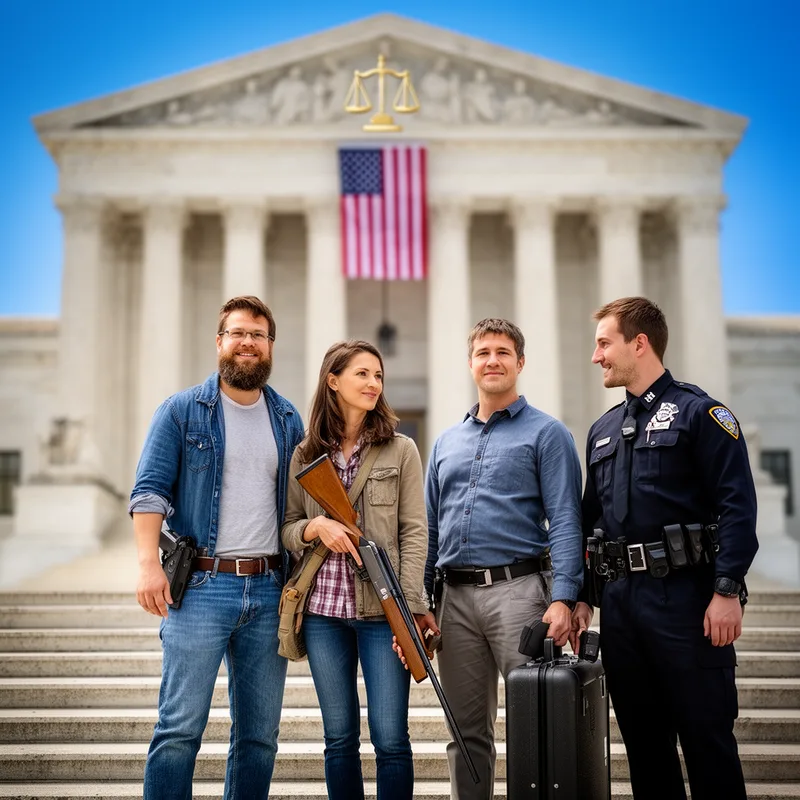
freedom to bear arms


 1
6.3
1
6.3
- noun
- /ˈfriːdəm tə bɛr ɑrmz/
- Formal
- Many Americans believe that the freedom to bear arms is a fundamental right enshrined in the Constitution.
Examples
-
Freedom to bear arms.
Blog text (6) -
The debate over the freedom to bear arms continues to be a contentious issue in American politics.
-
Advocates argue that the freedom to bear arms is essential for personal safety and self-defense.
Antonyms

- Specialized
51
5.5
To reduce or remove weapons and armies between countries to lower the chance of war
How Protected
- Formal
1
6.3
 119
3.3
119
3.3
Surface Forms
Morphology
The meaning ('right to own and carry weapons') is directly derivable from the constituents: 'freedom' (a right), 'to' (infinitive marker), 'bear' (to carry), and 'arms' (weapons). There is no idiomatic or highly metaphorical shift—only a formal/legal phrasing—so a B1 learner who knows the component words would normally infer the meaning.
Etymology
Freedom to bear arms comes from older English where bear meant 'to carry' and arms meant 'weapons', so the phrase painted the picture of people carrying weapons for protection or military service. That's why today it means the legal right, especially in the United States, for people to own or carry 'guns' or other 'weapons'.