
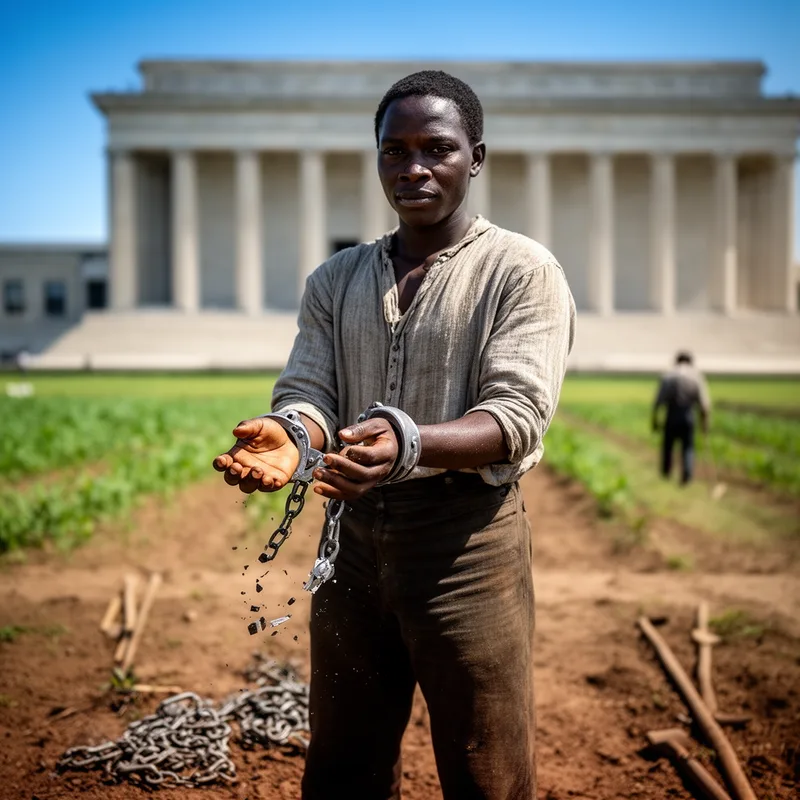
freedom from involuntary servitude
- noun
- /ˈfriːdəm frʌm ɪnˈvɑːlənˌtɛri ˈsɜrvɪtud/
- Formal
- The 13th amendment guarantees freedom from involuntary servitude to all citizens in the United States.
Examples
-
Civil rights activists fought for freedom from involuntary servitude and the abolition of slavery.
-
Legal scholars often discuss the historical impact of freedom from involuntary servitude in the context of American law.
-
The freedom from involuntary servitude is a fundamental human right.
-
Every citizen deserves freedom from involuntary servitude.
-
The 13th amendment guarantees freedom from involuntary servitude to all citizens in the United States.
-
Civil rights activists fought for freedom from involuntary servitude and the abolition of slavery.
-
Every citizen deserves freedom from involuntary servitude as a basic human right.
Antonyms

How Protected
- Formal

- NSFW
 20
4.4
20
4.4
Surface Forms
Morphology
freedom + from + involuntary + servitude
The phrase is directly compositional: 'freedom' + 'from' + 'involuntary' + 'servitude' plainly yields the idea of not being subjected to forced (unwilling) service or labor. This follows a common and cross-linguistic pattern ('freedom from X'), so a B1 learner who knows the constituent words can reliably infer the MWE's meaning.
Etymology
Freedom from involuntary servitude comes from the 13th Amendment after the US Civil War, when the law ended slavery. Picture people dropping their chains because no one can force them to work, and that image explains why it means 'not being forced to work'.