
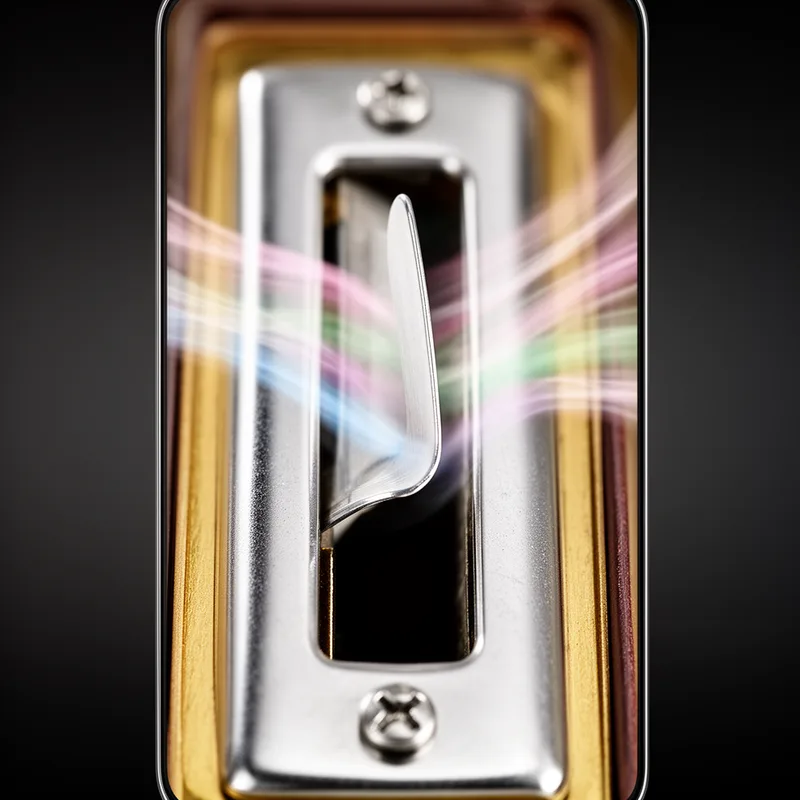
free-reed


 1
9.1
1
9.1
- noun
- /friː-riːd/
- Specialized
- The free-reed design allows for a unique sound.
Examples
-
Many harmonicas use a free-reed mechanism.
-
The harmonica uses a free reed that vibrates to produce sound when air passes through.
-
An accordion creates sound when air flows over its free-reed mechanisms.
-
Most Asian mouth organs, such as the sheng, also use free-reed technology to produce musical tones.
-
The harmonica is a free-reed instrument widely used in blues, folk, and classical music.
-
In the accordion, a free reed allows for a rich and vibrant musical tone.
-
Many traditional folk instruments feature a free reed design for enhanced expressiveness.
Synonyms

A thin stiff strip that makes sound when air moves through it in instruments like clarinets
Surface Forms
Morphology
Etymology
Free-reed is a simple descriptive name made from free and reed, where free means 'able to move' and reed is the thin strip that vibrates in wind instruments. It names a reed that vibrates 'freely' through a slot without sealing it, which is exactly how harmonicas and accordions make sound.