

fragmentation bomb
- noun
- /ˌfræŋɡmənˈteɪʃən bɑm/
- Specialized
- After the explosion, investigators recovered pieces of the fragmentation bomb scattered throughout the area.
Examples
-
The military used a fragmentation bomb to disable enemy vehicles and infantry in the open field.
-
Explosives engineers assessed the damage caused by a fragmentation bomb that exploded in the target zone, noting the extensive debris field.
-
Many injuries were caused by shrapnel from the fragmentation bomb during the battle.
-
The military deployed a fragmentation bomb in the operation.
-
Many fragmentation bombs were used during the conflict.
-
During the military exercise, the troops demonstrated the effectiveness of a fragmentation bomb that scatters lethal shrapnel over a wide area.
-
After detonation, the fragmentation bomb created a deadly shower of metal shards, injuring soldiers over a large radius.
Synonyms

 40
4.1
40
4.1

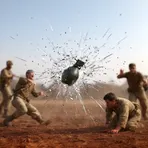
An object made to burst violently and cause damage

 1
7.0
1
7.0
A bomb that sends out many small metal pieces to injure or kill people
 1
9.8
1
9.8
A bomb that breaks into many small fast metal pieces to hit soldiers and vehicles
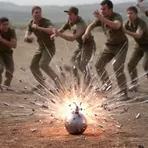
An explosive that sends many small fast pieces to hurt people
Surface Forms
Morphology
The meaning 'a bomb that breaks into many high-velocity pieces' is directly and transparently derivable from combining 'fragmentation' (breaking into fragments) with 'bomb' (an explosive device). This is a literal, compositional compound (common across languages in technical vocabulary), so a B1 learner who knows both constituents could infer the MWE's meaning.
Etymology
The noun fragmentation bomb puts together fragmentation, which means 'breaking into pieces', and bomb, which means an explosive. Its metal case is made to break into many sharp pieces that fly out to hurt people and damage things, so the name means 'a bomb to cause injury or damage over an area'.