
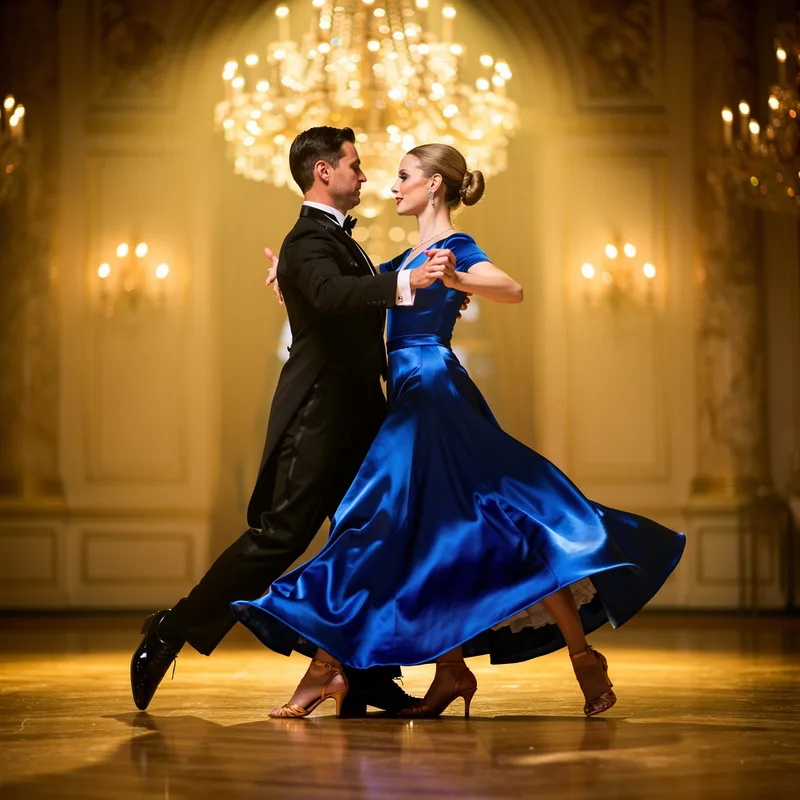
foxtrot
 9
7.4
9
7.4

- noun
- /ˈfɒkstrɒt/
- During the 1940s, the foxtrot, the blues, and Hollywood stars (e.g., Marlene Dietrich and Joan Crawford) had wide audiences and many admirers.
- dance a foxtrot
Examples
-
Dance for Joy! teaches adult classes in beginning Waltz and Foxtrot.
Blog text (16) -
Mr. de Beer was not fond of the foxtrot and perhaps wanted to discourage close dancing.
Fiction book (1998) -
You think kids want to come with their parents and take foxtrot lessons?
-
Shep has missed a step in the foxtrot again.
Blog text (24) -
Their first dance was the Foxtrot, to a gorgeous Adele song, and they seemed to float around the dance floor.
Blog text (9) -
Sabrina was almost overly energetic with her Foxtrot; all the judges told her to rein things in just a little bit.
Blog text (9) -
At age thirteen, I was sent to something called Fortnightly, dancing classes in which we learned ballroom manners and intricate foxtrots, sambas, and other elaborate dances I have long since forgotten.
Academic text (1997) -
At the dance competition, her elegant foxtrot impressed all the judges with its smooth transitions.
-
In their ballroom class, they learned how to master the foxtrot, combining slow glides and quick steps.
-
The couple practiced their foxtrot routine diligently, aiming to perfect their timing and posture.
Synonyms
 3
7.7
3
7.7
A ballroom dance for couples with slow and quick steps to lively music
Idioms

Compounds

- Offensive
A phrase people say as a joke when they feel shocked or confused
How Fast

Surface Forms
Etymology
The word foxtrot comes from a stage dancer called Harry Fox, who made a smooth stepping style popular around 1910. The name also brings to mind a fox on a light trot, which helps explain why the dance uses 'slow and quick steps'.